


What's Happening?
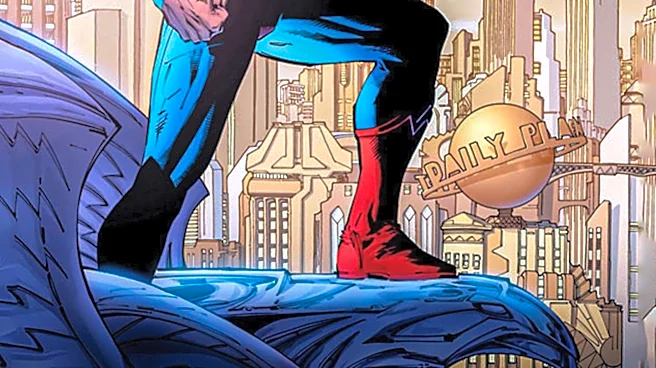
Thirty years ago, DC Comics intended for Superman and Lois Lane to marry in 'Superman (1987) #75.' However, this plan was significantly altered due to the then-upcoming TV show, 'Lois and Clark: The New Adventures of Superman.' The showrunners of the romantic
comedy series, which heavily focused on the budding romance between Clark Kent and Lois Lane, requested that DC Comics postpone the wedding in the comic books. They feared that a comic book marriage would detract from the show's narrative focus and marketing, which centered on the couple's developing relationship. Consequently, DC Comics changed its plans, leading to the famous storyline where Superman died at the hands of Doomsday instead of marrying Lois Lane.
Why It's Important?
This event represents a pivotal moment in the history of comic book and television synergy, illustrating how external media adaptations can directly influence the source material. The decision to delay the iconic Superman-Lois Lane wedding had significant implications for both the comic book industry and the burgeoning superhero TV landscape. For DC Comics, it forced a drastic narrative shift, leading to the introduction of new characters like Steel and Superboy, and iconic storylines that reshaped the Superman mythos. For the TV show, it aimed to protect its unique selling proposition, emphasizing the romantic dynamic. This incident highlights the complex interplay between different forms of media and the commercial considerations that often drive creative decisions in large franchises. It also underscores the power of adaptation synergy, where different media forms influence and sometimes constrain each other's narratives.
What's Next?
The initial delay of the comic book wedding ultimately led to a three-year postponement. Ironically, when the comic books were finally ready for the wedding, the 'Lois and Clark' TV show was also planning its own wedding storyline for its third season. To align the two, the TV show was forced to delay its wedding as well. This resulted in a controversial fake wedding storyline on the show, where Clark married a clone of Lois, which many fans found to be a betrayal. This decision is believed to have contributed to the show's eventual decline in popularity and its cancellation before a planned fifth season. The comic books, however, eventually proceeded with the actual wedding, which became a landmark event.
Beyond the Headlines
This historical event reveals the delicate balance between creative freedom and commercial pressures in major entertainment franchises. The attempt to synchronize narratives across different media, while seemingly logical for brand consistency, can lead to creative compromises and fan dissatisfaction. The 'fake wedding' storyline in 'Lois and Clark' serves as a cautionary tale about the risks of misleading audiences, particularly in long-running narratives where character relationships are deeply cherished. It also highlights the enduring power of iconic pairings like Superman and Lois Lane, whose relationship has been a cornerstone of superhero storytelling for decades. The incident underscores how fan expectations and the integrity of character arcs can be significantly impacted by decisions made at the corporate level, influencing the long-term trajectory of a franchise.