
What's Happening?
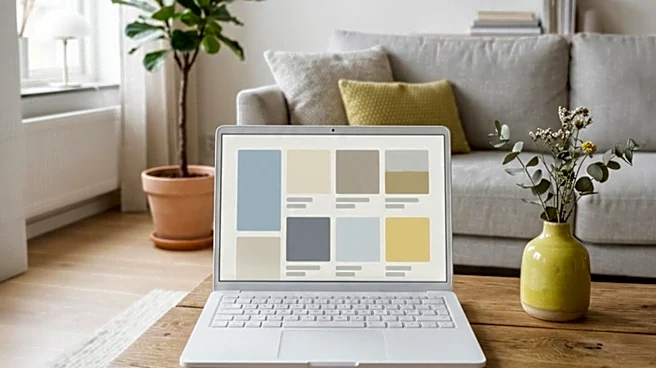
Artificial intelligence is being utilized to assist with home interior design, offering unexpected solutions for common styling dilemmas. One individual sought AI's help to redesign a cluttered living
room shelf, which included unaesthetic but necessary items like an internet modem and a PlayStation. The user experimented with various AI platforms, including ChatGPT, Gemini, and Claude, to generate inspiration and advice. ChatGPT provided the most useful visual inspiration, offering several design options that helped overcome a mental block in decorating the space. Gemini's suggestions were deemed unhelpful, while Claude, in its free version, could not generate custom images but offered general guidelines. The user successfully implemented ChatGPT's design tips, using existing home decor items to restyle the shelf, demonstrating AI's potential to provide actionable blueprints for home improvement projects.
Why It's Important?
The application of AI in home design signifies a growing trend of leveraging technology for practical, everyday tasks. For consumers, this means access to personalized design advice and visual inspiration that can help overcome creative hurdles and improve living spaces without the need for professional designers. This can democratize interior design, making it more accessible and affordable for a wider audience. For the home decor and design industry, AI tools present both opportunities and challenges. They can serve as powerful aids for individuals, potentially increasing demand for specific decor items or inspiring new product lines. However, they also raise questions about the future role of human designers and the value of their expertise. The ability of AI to generate tailored design concepts based on user input and existing items could transform how people approach home styling and renovation.
What's Next?
As AI technology advances, its role in home interior design is expected to become more sophisticated. Future AI tools might offer more accurate renderings, better understanding of user preferences, and seamless integration with e-commerce platforms for direct purchasing of suggested items. We could see AI applications that can analyze room dimensions, lighting conditions, and existing furniture to provide highly customized and practical design solutions. There's also potential for AI to assist with more complex design challenges, such as space planning or even architectural modifications. The development of AI that can learn from user feedback and adapt its suggestions over time will further enhance its utility. Additionally, the integration of augmented reality (AR) with AI design tools could allow users to visualize proposed changes in their homes in real-time, making the design process even more immersive and effective.
Beyond the Headlines
The use of AI in personal spaces like homes touches upon deeper implications regarding creativity, personal expression, and the human-technology interface. While AI can provide inspiration and solutions, it also raises questions about the authenticity of design and whether relying on algorithms diminishes personal creative input. There's a potential for AI to standardize aesthetics if users predominantly follow its suggestions, leading to less unique and more homogenized living spaces. On the other hand, AI could also empower individuals who feel creatively limited, helping them express their style more effectively. The ethical considerations around data privacy, especially when users upload images of their private spaces, will also become more prominent. Furthermore, the psychological impact of living in spaces designed with significant AI input—whether it fosters comfort and well-being or a sense of detachment—is an area that warrants future exploration.