


What's Happening?
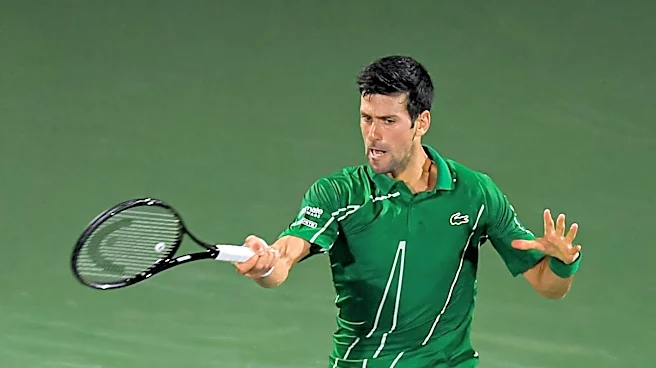
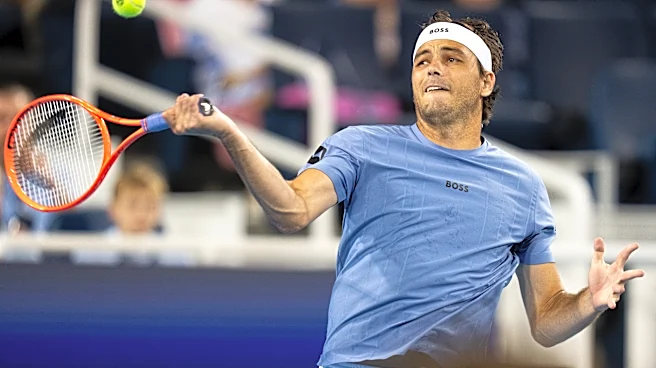
Tennis star Novak Djokovic has publicly reiterated his decision not to receive the COVID-19 vaccine, stating he has no regrets about the choice despite it leading to his exclusion from several major tournaments. In a recent documentary titled 'Novak Djokovic:
The Wolf in Winter,' Djokovic defended his stance, asserting his right to choose and questioning the necessity of vaccination for a healthy athlete who had already contracted the virus and developed immunity. His refusal to be vaccinated resulted in him missing significant events, including the Australian Open and the US Open in 2022, as well as multiple Indian Wells, Miami Open, Canadian Open, and Cincinnati Masters tournaments in 2022 and 2023. Governments worldwide, including the United States and Australia, implemented vaccine mandates for foreign visitors during the pandemic, which directly impacted Djokovic's ability to compete in these events. He emphasized that his decision was based on personal freedom and his belief that he posed no threat to others.
Why It's Important?
Djokovic's unwavering position highlights the broader societal debate surrounding individual autonomy versus public health mandates during a global crisis. His high-profile status as one of the world's most accomplished athletes amplifies the discussion, making his personal choice a subject of international scrutiny and discussion. For the sports world, his absence from major tournaments undoubtedly altered competitive landscapes and potentially impacted viewership and sponsorship revenues for those events. His continued defense of his decision, years after the peak of vaccine mandates, underscores a persistent sentiment among some individuals regarding personal medical choices. This situation also reflects the challenges faced by sports organizations and governments in balancing health protocols with the participation of key figures, influencing policies for future public health emergencies and athlete eligibility.
What's Next?
While most COVID-19 vaccine mandates for international travel have been lifted, Djokovic's public reaffirmation of his stance could reignite discussions about vaccine hesitancy and personal freedom in the context of public health. For Djokovic, his career will likely continue without the previous travel restrictions, allowing him to compete in all major tournaments. However, his documentary and subsequent comments may further solidify his image as a figure who prioritizes personal conviction over conformity, potentially influencing public opinion on similar issues. The broader implications could include continued scrutiny of how athletes navigate health mandates and personal beliefs, and how sports bodies adapt to evolving public health landscapes. There are no immediate foreseeable consequences for his playing career, but the philosophical debate surrounding his choices may persist.
Beyond the Headlines
Djokovic's case transcends a simple sports story, touching upon fundamental ethical and legal questions about bodily autonomy, individual rights, and collective responsibility during a pandemic. His argument that he 'wasn't a threat to anyone' and that his 'freedom to choose' was a fundamental right reflects a perspective held by many who resisted vaccine mandates. This narrative contributes to the ongoing discourse about the balance between state power in public health emergencies and individual liberties. The long-term cultural impact could be a reinforcement of individualistic values in certain segments of society, potentially influencing future responses to public health crises. It also raises questions about the role of public figures in shaping public discourse on health matters and the potential for their personal choices to be interpreted as endorsements or rejections of broader public health strategies.