







What's Happening?
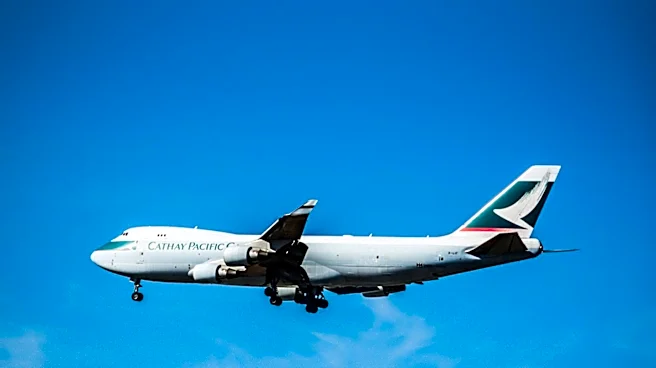
The Cathay Group has released its traffic figures for June 2026, showing a significant increase in both passenger and cargo traffic compared to the previous year. Cathay Pacific and HK Express together carried over 3.1 million passengers, marking a 9%
year-on-year increase. Cathay Cargo also reported a 9% rise in cargo tonnage. Despite elevated jet fuel prices, the group maintained strong performance, particularly in its long-haul network and premium cabins. The company also launched new direct flights to Wuxi, expanding its network in the Chinese Mainland. The Dragon Boat Festival and increased traffic through Hong Kong due to the Middle East situation contributed to the elevated load factors. The first half of 2026 saw a 17% increase in passenger numbers compared to the same period in 2025.
Why It's Important?
The Cathay Group's performance highlights the resilience of the aviation industry amidst fluctuating fuel costs and geopolitical tensions. The increase in passenger and cargo traffic suggests a robust recovery in travel demand, particularly in Asia. This growth is crucial for the group's financial health, as it anticipates a consolidated profit of HK$6.0 to HK$6.5 billion for the first half of 2026. The expansion of routes and strong demand in premium travel segments indicate a strategic focus on high-value markets. The group's ability to navigate fuel cost challenges while expanding its network underscores its competitive positioning in the global aviation market.
What's Next?
Looking ahead, the Cathay Group expects continued strong demand across its network, particularly during the summer peak. The company plans to monitor the impact of new customs duties on e-commerce flows into Europe, which could affect cargo operations. The anticipated publication of the group's interim results in August 2026 will provide further insights into its financial performance and strategic direction. Stakeholders will be watching closely to see how the group manages ongoing fuel cost pressures and geopolitical uncertainties.