





What's Happening?
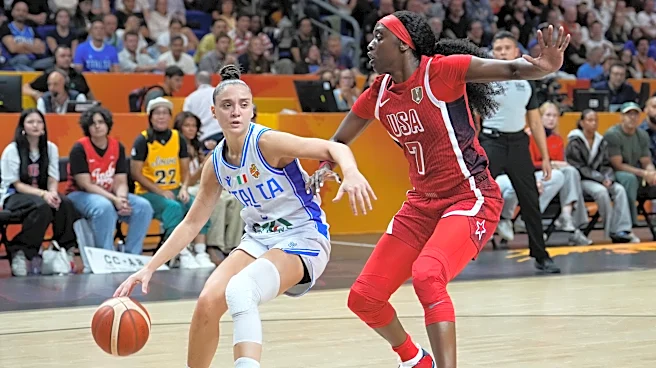
The United States Women’s World Cup basketball team narrowly defeated Italy with a score of 55-52 in their second Group Play game on Sunday. This victory secured their direct qualification for the quarterfinals, which are scheduled to begin on Thursday,
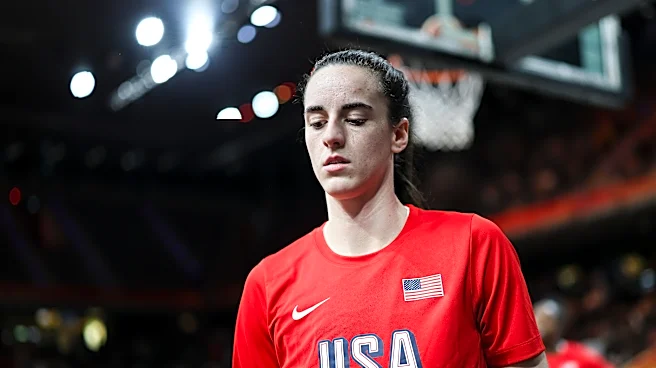
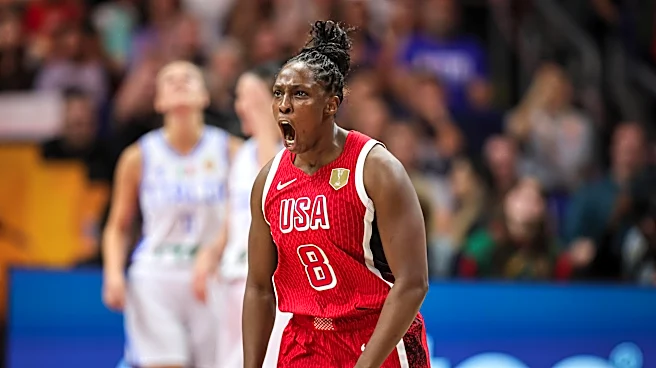
September 10th. Despite the win, the U.S. team experienced significant offensive difficulties, shooting only 29% from the field and recording more turnovers (14) than assists (11). Jackie Young was the sole American player to achieve double-digit points with 10, and the only one to make more than two field goals or assists. Key players like Caitlin Clark, Breanna Stewart, and Kahleah Copper struggled, with Clark scoring just 1 point on 0-for-6 shooting, Stewart 5 points on 1-of-9, and Copper 6 points on 0-of-4. The team also missed their first 10 three-point attempts. The U.S. trailed by two points with under five minutes remaining before a late surge secured the win. This marks the team's lowest-scoring World Cup game since 1971.
Why It's Important?
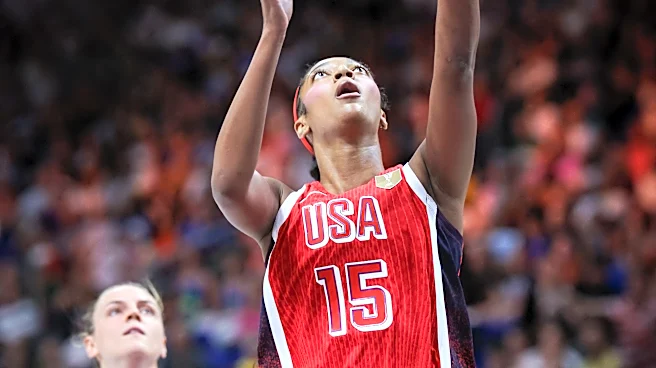
This performance raises concerns about the U.S. women's basketball team's offensive consistency and their ability to maintain dominance in international play, especially as they head into the single-elimination rounds of the FIBA Women’s World Cup. The struggles against an Italian team with only one WNBA player highlight potential vulnerabilities that could be exploited by stronger opponents like France, Australia, and Spain. The absence of star players A’ja Wilson and Kelsey Plum due to injury, replaced by second-year WNBA players Kiki Iriafen and Sonia Citron, appears to be impacting the team's cohesion and scoring efficiency more than initially anticipated. While the roster is considered deep, the recent game suggests that even a stacked team can face significant challenges when key offensive contributors are either absent or underperforming. A continued lack of offensive rhythm could jeopardize their chances of winning the World Cup, potentially ending a long-standing streak of U.S. women's national team victories.
What's Next?
The U.S. women's team will now focus on improving their offensive execution and overall performance as they prepare for the single-elimination quarterfinals, which commence on Thursday, September 10th. Their upcoming opponents will be formidable, including teams like France, Australia, and Spain, all of whom pose a significant threat. The coaching staff will likely need to address the team's shooting woes, turnover issues, and integrate the newer players more effectively into the offensive scheme. The team's ability to adapt and overcome these challenges in a short timeframe will be crucial for their success in the tournament. Failure to rectify these issues could lead to an early exit, marking a rare defeat for the U.S. women's national team in international competition.
Beyond the Headlines
The U.S. women's basketball team's recent struggles against Italy could have broader implications for the perception of American dominance in women's international basketball. While the U.S. has historically been a powerhouse, this close call, coupled with the offensive inefficiencies, might signal a narrowing gap in talent and strategy among top international teams. This could lead to increased global interest and competitiveness in women's basketball, potentially boosting the sport's profile worldwide. For the U.S. team, it underscores the importance of continuous player development and strategic evolution, even with a deep talent pool. It also highlights the critical role of veteran leadership and experience in high-stakes international tournaments, especially when facing unexpected challenges or player absences. The outcome of this World Cup could influence future funding, training methodologies, and recruitment strategies for national teams globally.