

What's Happening?
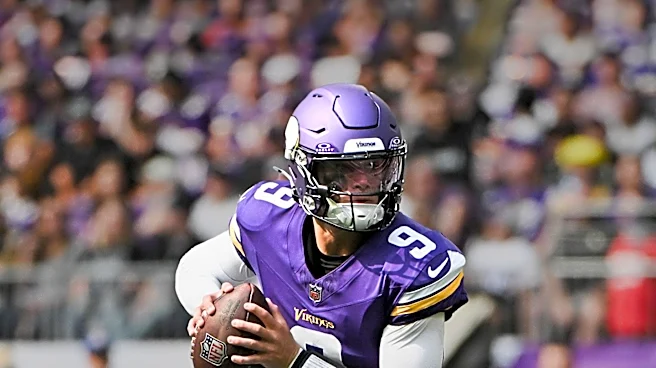
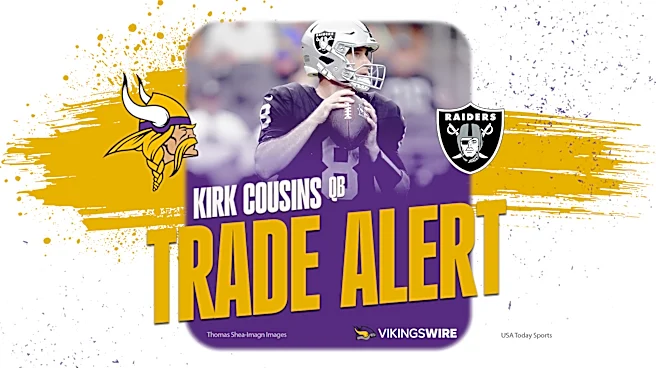
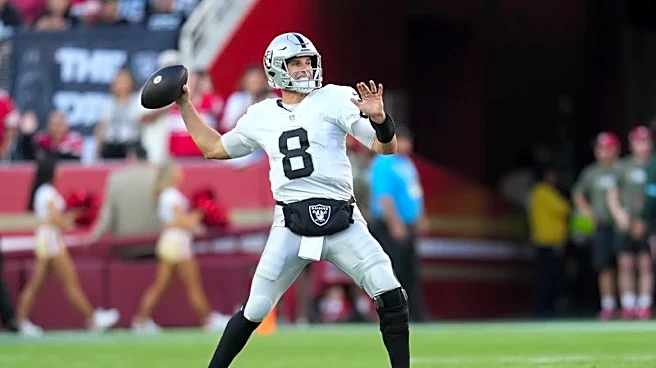
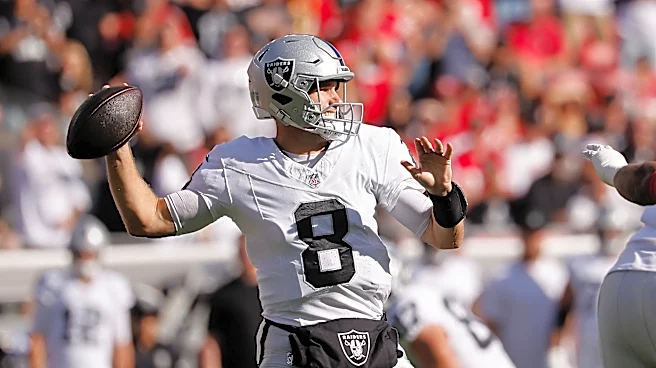
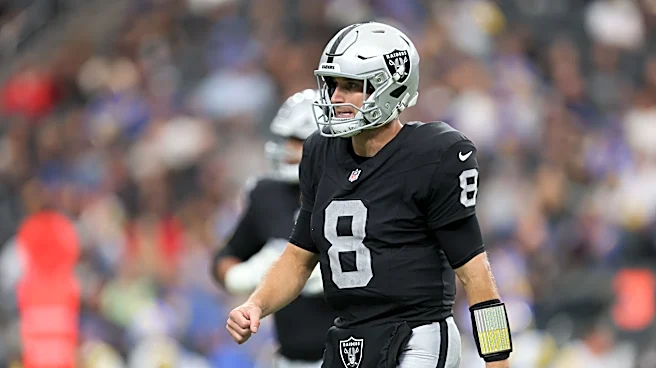
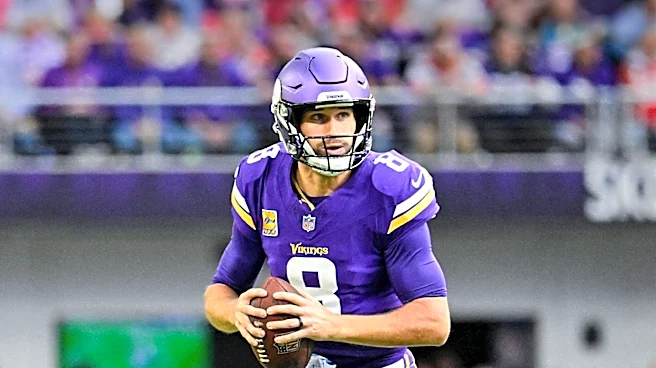
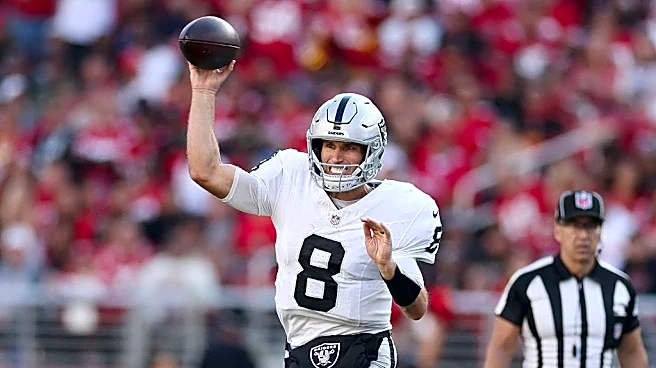
Following a significant 23-6 loss to the Buffalo Bills in Week Nine, the Minnesota Vikings made a midseason trade to reacquire quarterback Kirk Cousins from the Las Vegas Raiders. Head coach Kevin O'Connell and general manager Nolan Teasley determined
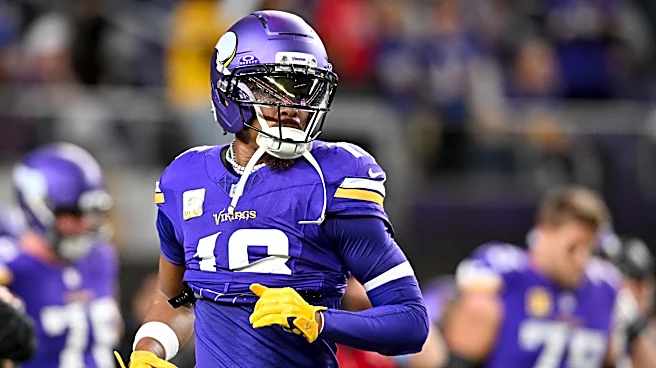
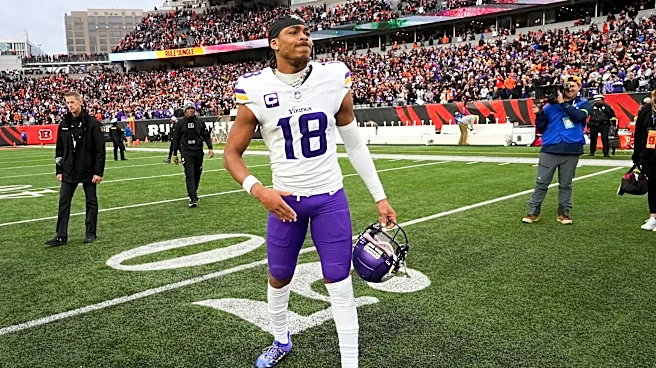
that after a poor performance by Carson Wentz and the Vikings' offense, bringing back Cousins was the most viable option for immediate improvement. Cousins is familiar with the Vikings' system, having played six seasons with the team from 2018 to 2023, including two under O'Connell. This familiarity is expected to allow him to integrate quickly into the starting lineup. The move aims to revitalize the team's passing game, particularly benefiting wide receivers Justin Jefferson and Jordan Addison, who previously thrived with Cousins. The Vikings, despite having a strong defense, have struggled offensively, leading to a two-game losing streak.
Why It's Important?
This trade signifies a critical juncture for the Minnesota Vikings, indicating a desperate attempt to salvage their season and make a playoff push. Midseason quarterback changes are often challenging, but the decision to bring back a familiar face like Kirk Cousins suggests a strategic move to minimize the typical acclimation period. The success of this trade could significantly impact the team's performance in the highly competitive NFL, potentially altering the playoff picture in the NFC. For players like Justin Jefferson, who achieved his best numbers with Cousins, this reunion could reignite their individual performances and the team's offensive output. Conversely, if Cousins fails to deliver immediate results, it could further destabilize the team and raise questions about the coaching staff's long-term strategy and the general manager's decision-making.
What's Next?
Kirk Cousins is expected to immediately step into the starting quarterback role for the Minnesota Vikings as they prepare to face the Green Bay Packers in Week 10. The immediate goal is to end the Vikings' two-game losing streak by improving their aerial attack and maintaining an even time of possession. The team hopes that Cousins' presence will enable wide receivers Justin Jefferson and Jordan Addison to become significant threats, forcing opponents to defend differently. If the Vikings can secure a win against the Packers with Cousins at the helm, it could mark the beginning of a turnaround for their season and potentially lead to a postseason run. The performance in the upcoming games will be crucial in determining the effectiveness of this midseason quarterback change and the team's trajectory for the remainder of the season.
Beyond the Headlines
The Vikings' decision to trade for Kirk Cousins reflects a broader trend in professional sports where teams are willing to make bold, immediate changes in pursuit of success, often prioritizing short-term gains over long-term stability. This move highlights the immense pressure on NFL franchises to perform and the high stakes involved in quarterback decisions. It also underscores the value of familiarity and established chemistry in a complex offensive system. The trade could serve as a case study on the efficacy of bringing back former players in critical roles. Furthermore, it raises questions about the development and evaluation of backup quarterbacks like Carson Wentz, and the team's contingency planning. The outcome of this move will not only affect the Vikings' season but could also influence future team management strategies across the league regarding midseason roster adjustments.