




What's Happening?
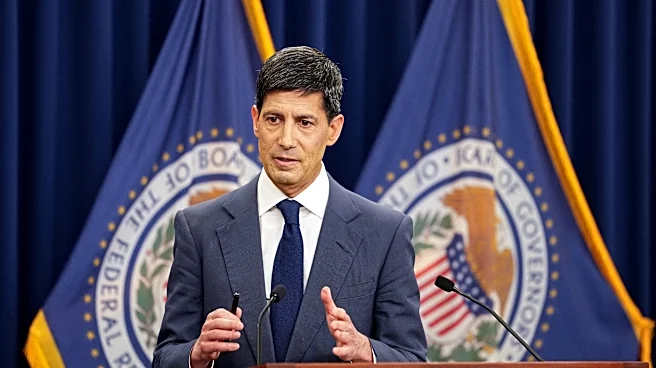
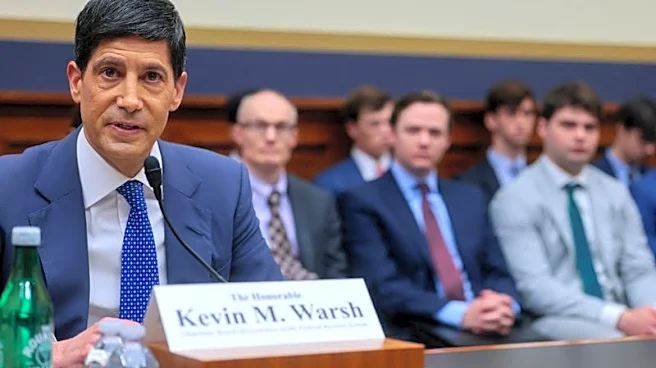
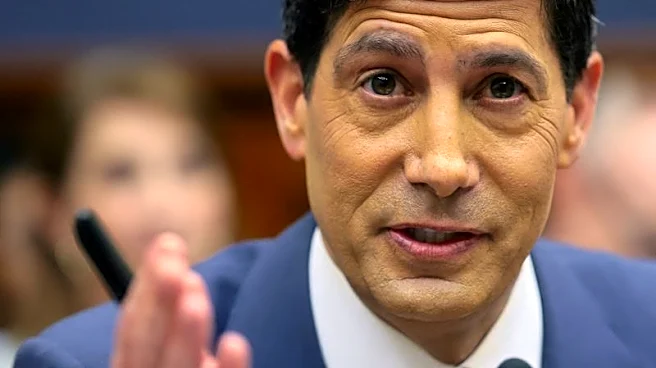
Federal Reserve Chair Kevin Warsh has highlighted persistent inflation concerns in his recent testimony before Congress, emphasizing the Fed's 'no tolerance' stance for sustained high inflation. A key inflation report released on the same day showed a 3.5%
year-over-year increase in headline inflation for June, with a monthly decline of 0.4%. The core Consumer Price Index (CPI) remained flat month-over-month. Initially, markets responded by reducing the probability of a July rate hike to 16%, down from 42% the previous day. However, subsequent market activity has seen the odds of a rate hike increase, reflecting ongoing uncertainty about the Fed's policy trajectory.
Why It's Important?
The Federal Reserve's approach to managing inflation is crucial for the U.S. economy, as it influences interest rates, borrowing costs, and overall economic growth. Persistent inflation can erode purchasing power and affect consumer confidence, while the Fed's policy decisions can impact financial markets and investment strategies. The fluctuating odds of a rate hike indicate market uncertainty about the Fed's next steps, highlighting the challenges of balancing inflation control with economic stability. The Fed's actions will be closely watched by investors, businesses, and policymakers, as they have significant implications for economic planning and decision-making.
What's Next?
Market observers will be closely monitoring upcoming economic data releases, particularly those related to inflation and employment, as these could influence the Fed's policy decisions. Key indicators such as core CPI or changes in unemployment rates could shift expectations for future rate actions. Additionally, statements from Fed officials and updates to the FOMC's dot plot will provide further insights into the central bank's policy direction. The Fed's ability to navigate these challenges will be critical in maintaining economic stability and addressing inflationary pressures.