






What's Happening?
ProChain Ventures is evaluating investments in cargo mobility, specifically focusing on transportation, autonomy, and infrastructure across rail, air, and maritime systems. The firm's investment thesis centers on the necessity of moving goods in the real
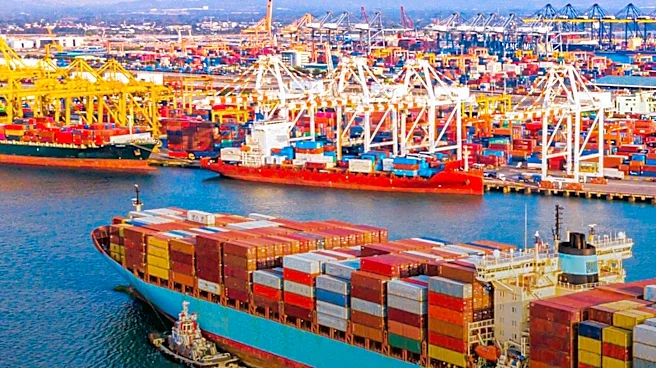
world, recognizing that effective transportation systems require more than just promising vehicles. They seek founders who address constraints related to routes, infrastructure, operating procedures, and customer economics when building new capabilities in cargo mobility. ProChain Ventures' interest spans battery-electric rail, cargo aviation, autonomous delivery, and maritime mobility. The firm acknowledges that each mode has distinct requirements for range, payload, safety, infrastructure, and operational reliability. Instead of treating autonomy or electrification as standalone business cases, they evaluate the specific mission. Cargo movement is also identified as central to industrial resilience and sustainment, with technologies creating value in commercial freight and supporting critical supply missions, depending on customer needs, operating conditions, and deployment requirements.
Why It's Important?
This investment strategy by ProChain Ventures holds significant implications for U.S. industries and national security. By focusing on the practical constraints of cargo mobility, the firm is addressing critical bottlenecks in supply chains and logistics. Investments in battery-electric rail, cargo aviation, autonomous delivery, and maritime mobility can lead to more efficient, sustainable, and resilient transportation networks across the U.S. This is crucial for reducing operational costs, mitigating environmental impact, and enhancing the speed and reliability of goods movement. Furthermore, the emphasis on industrial resilience and national security highlights the strategic importance of these advancements. A robust cargo mobility infrastructure is vital for supporting military logistics, disaster response, and maintaining economic stability during crises. Companies developing solutions in these areas stand to gain substantial investment and market share, while industries reliant on efficient freight transport, from manufacturing to retail, will benefit from improved operational capabilities and reduced supply chain vulnerabilities.
What's Next?
ProChain Ventures will likely continue to identify and invest in companies developing innovative solutions for cargo mobility, with a focus on practical applications that address real-world constraints. This could lead to increased development and deployment of advanced technologies in battery-electric rail, cargo aviation, autonomous delivery, and maritime transport within the U.S. We can anticipate a greater emphasis on integrating these technologies into existing infrastructure and operational frameworks, rather than standalone solutions. The firm's focus on commercial needs and national security suggests that future investments will prioritize projects that offer dual-use benefits, enhancing both economic efficiency and strategic capabilities. This approach may also encourage more collaboration between private sector innovators and government agencies to ensure that new cargo mobility solutions meet both market demands and national defense requirements, potentially shaping the future landscape of U.S. logistics and supply chain management.
Beyond the Headlines
The strategic investments by ProChain Ventures in cargo mobility underscore a broader shift towards a more integrated and resilient national infrastructure. Beyond the immediate economic and security benefits, this focus on practical, mission-specific solutions could drive significant advancements in environmental sustainability within the transportation sector. By prioritizing battery-electric and autonomous systems, the firm is indirectly contributing to the reduction of carbon emissions and reliance on fossil fuels, aligning with national climate goals. Furthermore, the emphasis on industrial resilience highlights a growing recognition of the vulnerabilities in global supply chains, particularly in the wake of recent disruptions. This investment approach could foster a more localized and robust manufacturing and distribution ecosystem within the U.S., reducing dependence on overseas production and enhancing economic sovereignty. The long-term impact could be a fundamental transformation of how goods are moved, stored, and managed, leading to a more efficient, secure, and environmentally conscious national economy.