
What's Happening?
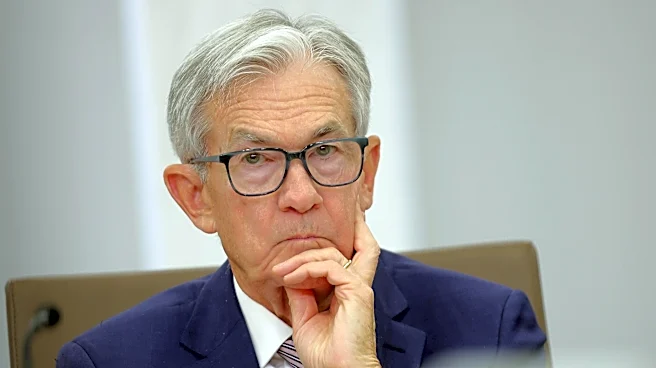
Federal Reserve Chairman Kevin Warsh is facing a complex monetary policy landscape, as the surge in artificial intelligence (AI) investments significantly impacts financial conditions. Despite recent market
turmoil, Warsh has maintained public silence, leaving his colleagues to debate the central bank's approach to future rate hikes. The financial markets are exhibiting rapid changes, with expectations for monetary policy shifting based on events like personnel announcements at semiconductor companies. For instance, Jensen Huang's reinstatement at Nvidia led Wall Street to price in at least two more rate hikes. Warsh previously noted that interest rates are not 'divorced' from AI investment, highlighting emerging differences in the availability and cost of capital across various investments. This suggests that while AI demand may bolster the economy despite higher borrowing costs, the investment boom itself relies on financing sensitive to market confidence and credit availability. The Fed is grappling with how much economic restraint financial markets have already imposed before considering further rate increases.
Why It's Important?
The current situation is critical for the U.S. economy as the Federal Reserve determines its next steps on interest rates amidst an AI-driven investment surge. The interplay between AI investment and monetary policy has profound implications for various sectors. The extraordinary demand for AI infrastructure, while potentially strengthening the economy, also creates a dependency on market confidence and credit availability, making the economy vulnerable to shifts in these factors. Companies like Nvidia are not only influencing technology stock valuations but also the ability of other firms to fund their expansion, creating a ripple effect across industries. The debate among Fed governors, with some favoring aggressive responses to inflation and others being more cautious, underscores the uncertainty. The outcome of these decisions will affect borrowing costs for businesses and consumers, influencing economic growth, investment, and employment across the nation. The increasing economic footprint of AI could make the expansion more resilient but also expose more businesses and households to potential reversals.
What's Next?
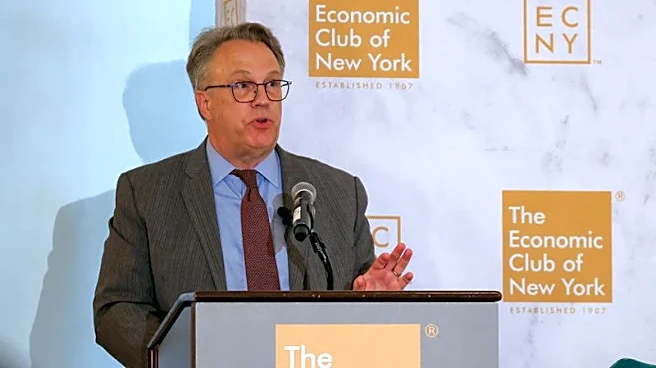
The immediate focus for the Federal Reserve is the upcoming December rate decision, where Chairman Warsh and his colleagues will determine the central bank's next move. The ongoing debate among Fed governors, with figures like Christopher Waller and Lisa Cook advocating for aggressive measures against inflation and John Williams showing less inclination for extraordinary steps, indicates a divided board. The market's sensitivity to external factors, such as personnel changes in major tech companies, will continue to influence expectations for monetary policy. Stakeholders, including investors, businesses, and consumers, will closely watch the Fed's decision for signals on future economic conditions. The central bank will need to assess the extent of economic restraint already imposed by financial markets to avoid over-tightening or under-tightening. The evolving relationship between AI investment and broader economic stability will likely remain a key consideration in future policy discussions.
Beyond the Headlines
The current scenario highlights a significant shift in how financial markets interact with central bank policy. Historically, markets often took cues from the Federal Reserve, but now, market reactions to events in the technology sector can materially alter monetary policy expectations. This dynamic introduces new complexities for the Fed, as it must account for the rapid and sometimes unpredictable influence of technological advancements and corporate developments on financial conditions. The increasing interconnectedness of the AI investment boom with broader economic health raises questions about systemic risk. If the prosperity generated by AI becomes a primary driver of household spending and economic growth, any reversal in the AI sector could have widespread economic consequences. This situation also underscores the challenge for policymakers in understanding and responding to the unique economic characteristics of a technology-driven boom, where traditional economic indicators might not fully capture the underlying dynamics of capital allocation and market sentiment.