







What's Happening?
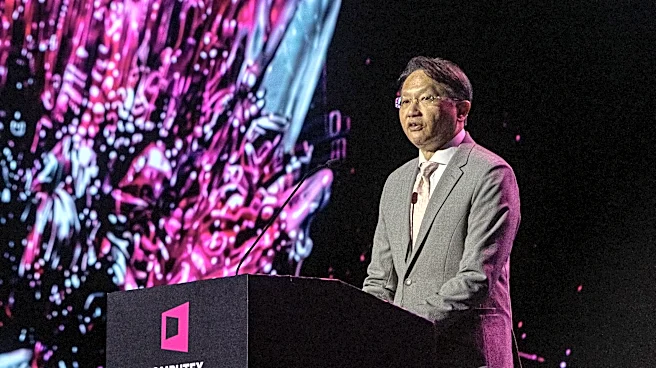
NVIDIA founder and CEO Jensen Huang recently advised young developers to become the 'world's best user of AI' to thrive in the evolving job market. Speaking at NVIDIA's GTC conference in Berlin, Huang emphasized that young people should not fear AI taking
their jobs but rather learn to leverage it to achieve tasks previously impossible. He highlighted that AI's true value lies in enabling new capabilities and expanding possibilities, rather than merely increasing efficiency in existing tasks. Huang suggested that engineers could use AI to explore thousands of design suggestions, significantly broadening their scope. He also addressed concerns about entry-level job opportunities, stating that while some jobs may become less necessary, new roles and industries will emerge. Huang stressed the importance of mastering various AI tools, including open and closed models, managing AI memory, and creating knowledge graphs. He believes this advice applies across all professions, citing examples of how a plumber or furniture salesperson could use AI to enhance their services.
Why It's Important?
Jensen Huang's advice is significant as it comes from a leader at the forefront of the AI revolution, offering a strategic perspective on career development in an AI-driven world. His emphasis on mastering AI tools rather than fearing job displacement provides a proactive roadmap for individuals entering or navigating the tech industry. This perspective challenges the common narrative of AI as a job destroyer, reframing it as an enabler of new forms of productivity and creativity. For the U.S. workforce, this guidance suggests a critical need for educational institutions and professional development programs to adapt and integrate AI literacy into their curricula. Companies may also need to invest more in upskilling their employees in AI applications to remain competitive. Huang's vision implies a future where AI proficiency becomes a fundamental skill across diverse sectors, potentially leading to a more innovative and efficient economy, but also requiring a significant shift in how skills are valued and developed.
What's Next?
Following Jensen Huang's advice, it is likely that there will be an increased focus on AI literacy and practical application skills in educational and professional development programs. Universities and coding bootcamps may further integrate AI tool mastery into their offerings, moving beyond theoretical understanding to hands-on application. We could see a surge in demand for courses and certifications focused on prompt engineering, AI agent management, and specialized AI tool usage. Businesses might also accelerate their adoption of AI tools and invest in training programs to ensure their workforce can effectively leverage these technologies. This shift could lead to the emergence of new job roles centered around AI integration and optimization across various industries. Furthermore, as more individuals become proficient in AI, the landscape of innovation could accelerate, with new AI-powered products and services emerging more rapidly, potentially reshaping entire industries and creating new economic opportunities.
Beyond the Headlines
Beyond the immediate career advice, Huang's vision touches upon a deeper philosophical shift in human-technology interaction. He suggests that AI is not just a tool for automation but a partner that expands human capabilities, allowing for exploration and innovation on an unprecedented scale. This perspective implies a future where human creativity and problem-solving are augmented by AI, leading to a symbiotic relationship rather than a replacement dynamic. Ethically, this raises questions about equitable access to AI education and tools, ensuring that the benefits of this technological advancement are broadly distributed and do not exacerbate existing inequalities. Culturally, it may foster a new generation of 'AI-native' professionals who approach problems with an integrated human-AI mindset. Legally, the increasing autonomy of AI agents, as Huang also discussed, will necessitate new frameworks for oversight, security, and accountability, particularly as agents from different companies begin to collaborate, creating complex interdependencies and potential vulnerabilities.