





What's Happening?
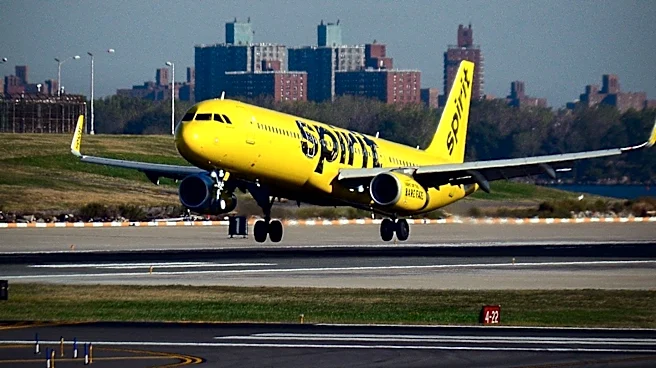
The cessation of Spirit Airlines' operations six months ago has contributed to a rise in holiday airfares, with prices on its former routes increasing by a median of 25.3% between June 2025 and this year, according to aviation data firm Cirium. Fares
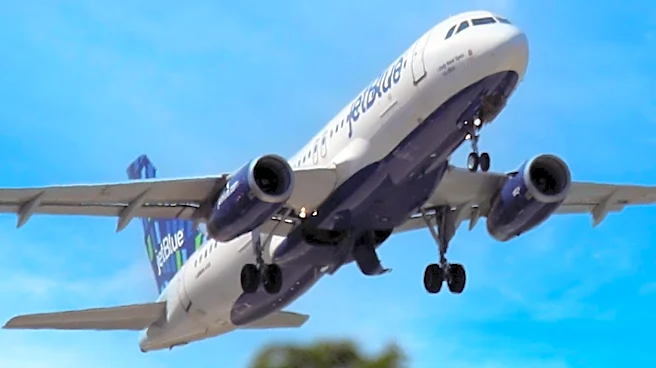
climbed on over 90% of the 1,126 city pairs Spirit had served. While fares on routes Spirit never flew also rose by 18.3%, the difference suggests a 'Spirit Effect' on pricing. Concurrently, JetBlue, which previously attempted to acquire Spirit, is experiencing financial difficulties, reporting a $257 million loss in the third quarter, an increase from $143 million a year prior, largely due to a 57% jump in average fuel prices. JetBlue also carries approximately $8.5 billion in debt and finance lease obligations, leading its lenders to engage financial advisers, though JetBlue maintains it has no plans for bankruptcy.
Why It's Important?
The disappearance of a major low-cost carrier like Spirit Airlines has a tangible impact on consumer airfares, demonstrating the role of competition in keeping prices down. The 'Spirit Effect,' where its presence on a route tended to lower fares across all airlines, is now evident in the post-demise price increases. This situation highlights the fragility of the airline industry, where fuel costs and market competition significantly influence profitability and consumer prices. JetBlue's financial struggles, exacerbated by rising fuel costs and substantial debt, underscore the broader economic pressures facing airlines. Should another major carrier like JetBlue face similar challenges or bankruptcy, it could further reduce competition and lead to even higher airfares for travelers, particularly during peak travel seasons like the holidays.
What's Next?
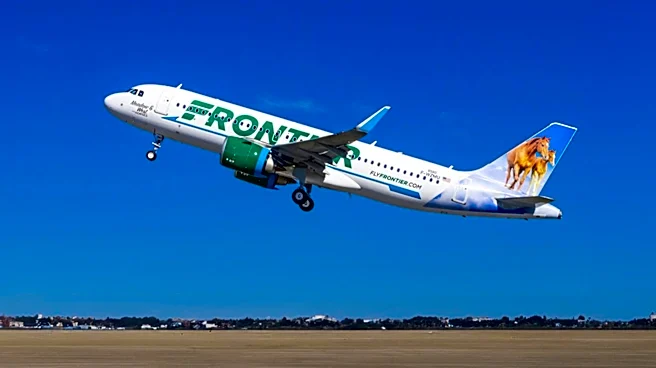
Travelers can anticipate continued higher airfares, especially during holiday periods, as the market adjusts to the absence of Spirit Airlines and other carriers face economic pressures. Discount carriers like Frontier and Breeze have already begun to fill some of the void left by Spirit, launching new routes with competitive fares, but it remains to be seen if this will fully offset the broader price increases. JetBlue's financial situation will be closely monitored by investors and consumers; while the airline insists it has no bankruptcy plans, the engagement of financial advisers by its lenders indicates a level of concern. The airline industry will likely continue to grapple with high fuel costs and the challenge of balancing profitability with consumer affordability, potentially leading to further adjustments in pricing strategies and service offerings, such as increased baggage fees.
Beyond the Headlines
The current state of the airline industry, marked by Spirit's collapse and JetBlue's struggles, points to a potential shift in the landscape of affordable air travel. The 'Spirit Effect' illustrates how the presence of ultra-low-cost carriers can anchor prices for the entire market. Its absence, coupled with the financial strain on other airlines, could lead to a less competitive environment, potentially diminishing options for budget-conscious travelers. This situation also brings into focus the broader economic factors, such as global fuel prices and supply chain issues, that disproportionately affect industries with high operational costs. The long-term implications could include a consolidation of the airline market, fewer low-fare options, and a re-evaluation of business models to ensure resilience against volatile economic conditions, ultimately impacting the accessibility and affordability of air travel for the general public.