





What's Happening?
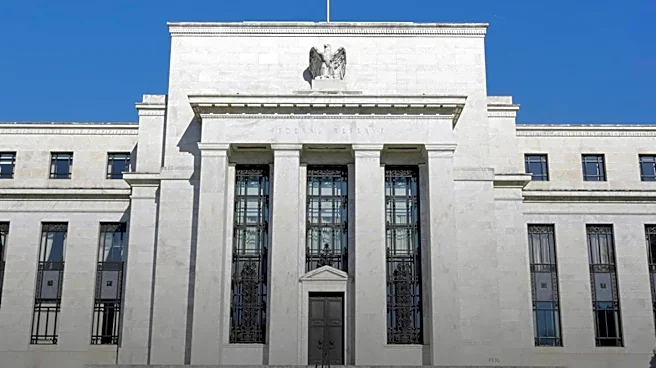
Kansas City Fed President Jeff Schmid has raised concerns about the growing scale of artificial intelligence (AI) investments, suggesting that the sector may be becoming 'too big to fail.' Schmid's comments highlight the significant financial commitments
made by major technology firms in AI, which now total nearly $2.4 trillion. The concentration of investment in a few large companies raises the risk of systemic impact if any of these firms face difficulties. Schmid's remarks also touch on the potential implications for monetary policy, as AI-driven demand for resources could affect inflation and interest rate decisions. The shift towards external financing for AI projects further involves the Federal Reserve, as it monitors the stability of credit markets.
Why It's Important?
The rapid expansion of AI investments poses potential risks to the broader economy. The concentration of capital in a few large technology firms means that any financial instability within these companies could have widespread repercussions. The comparison to the 2008 financial crisis underscores the potential for systemic risk if the AI sector experiences a downturn. Additionally, the reliance on debt and external financing for AI projects could strain credit markets, which the Federal Reserve monitors closely. The impact on monetary policy is also significant, as AI-driven demand for resources could complicate the Fed's efforts to manage inflation and interest rates.
What's Next?
As AI investments continue to grow, the Federal Reserve and other regulators may need to increase their scrutiny of the sector to mitigate potential risks. Policymakers may consider implementing measures to ensure that the concentration of investment does not lead to systemic vulnerabilities. The Fed may also need to adjust its monetary policy approach to account for the economic impact of AI-driven demand. Market participants will likely keep a close watch on developments in the AI sector, as any signs of instability could have significant implications for financial markets and the broader economy.