





What's Happening?
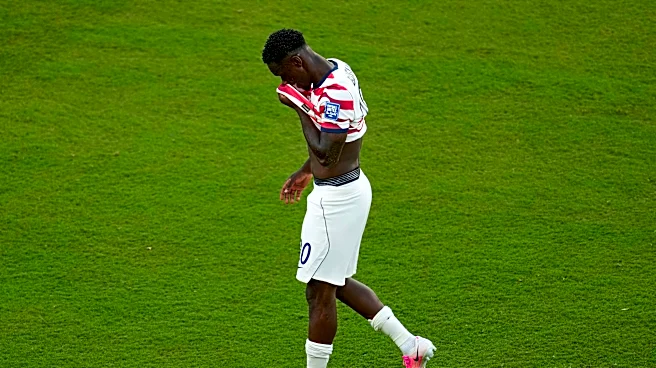
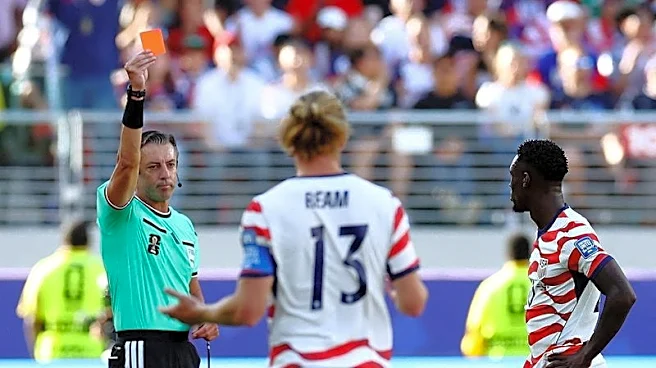
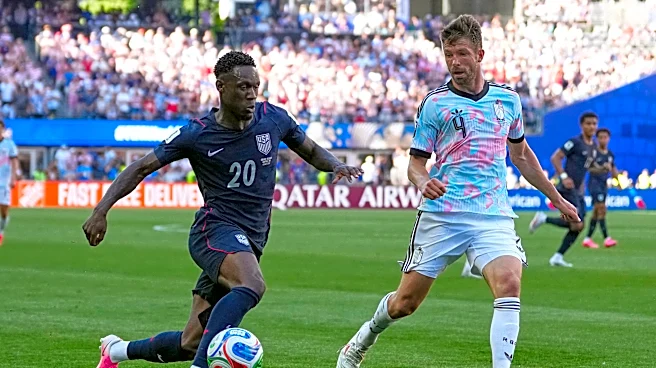
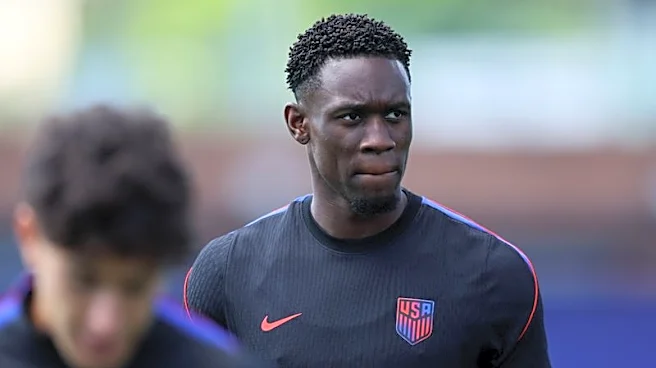
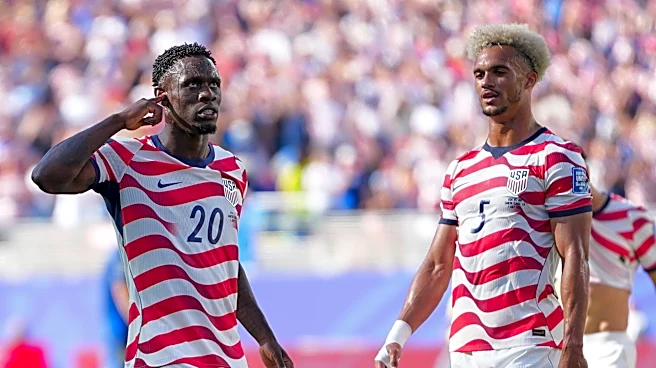
Folarin Balogun, a striker for the US Men's National Soccer Team, has become the center of controversy after FIFA overturned his red-card suspension, allowing him to play in a World Cup match against Belgium. This decision marked the first time since
1962 that a red-card suspension was overturned at a World Cup. Despite being allowed to play, Balogun and his team were defeated 4-1 by Belgium, leading to the USA's exit from the tournament. Balogun expressed disappointment in the team's performance and acknowledged the controversy surrounding the decision. The overturning of the suspension was reportedly influenced by President Trump, who requested FIFA's intervention. UEFA criticized the decision, stating it undermined the integrity of the game.
Why It's Important?
The decision to overturn Balogun's suspension has significant implications for the integrity and credibility of international soccer competitions. It raises questions about the influence of political figures on sports governing bodies and the consistency of rule enforcement. The controversy may affect FIFA's reputation and its relationship with UEFA, which has publicly condemned the decision. For the US team, the incident adds to the disappointment of their World Cup performance, potentially impacting team morale and public support. The situation also highlights the challenges of maintaining fairness and transparency in high-stakes international sports events.
What's Next?
The fallout from the decision may lead to further scrutiny of FIFA's governance and decision-making processes. UEFA's strong reaction suggests potential tensions between European soccer authorities and FIFA, which could influence future policy discussions. For Balogun and the US team, the focus will likely shift to rebuilding and preparing for future competitions, addressing both performance and public perception challenges. The incident may also prompt discussions within FIFA about the criteria and processes for overturning disciplinary actions, aiming to prevent similar controversies in the future.