

What's Happening?
Manchester United is grappling with a significant challenge in its attacking lineup as striker Benjamin Sesko is reportedly sidelined until 2027 due to a shin injury. This long-term absence has created a void in the team's forward options, a position
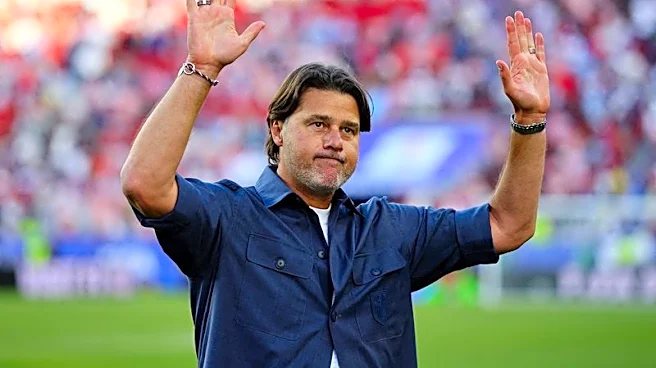
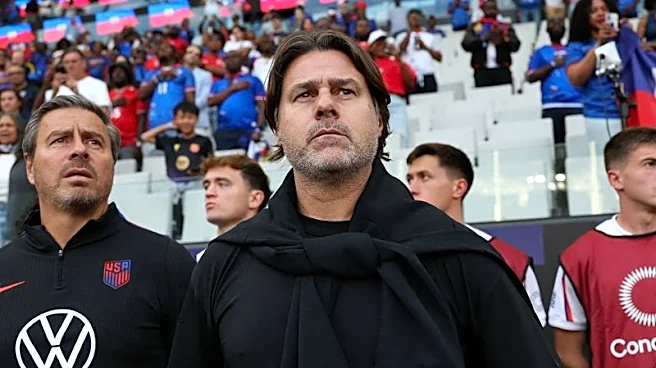
that has been problematic for the club this season. The team had previously failed to secure a new No. 9 during the summer transfer window, relying on Joshua Zirkzee as a backup and Bryan Mbeumo to lead the line under former manager Michael Carrick. With Mauricio Pochettino now taking over as manager, the club is assessing its options for the January transfer window. While a new permanent frontman seems unlikely in the winter window, there is a possibility that United might recall Chido Obi from his loan spell at Willem II to bolster their attacking resources. Obi, an 18-year-old Dane, has not yet scored in six substitute appearances for Willem II, prompting consideration of his early return.
Why It's Important?
The prolonged absence of Benjamin Sesko significantly impacts Manchester United's strategic planning and on-field performance. A key striker being out for an extended period forces the club to re-evaluate its transfer priorities and potentially invest in new talent sooner than anticipated. This situation could lead to increased pressure on other forwards to perform and may influence tactical decisions by the new manager, Mauricio Pochettino. The club's inability to secure a striker in the summer, coupled with Sesko's injury, highlights a critical gap in squad depth. This could affect their competitiveness in domestic leagues and European competitions, potentially impacting their financial standing through prize money and broadcast revenues. Furthermore, the decision to recall a young player like Chido Obi underscores the urgency of the situation and the club's need to find immediate solutions, which could either accelerate Obi's development or place undue pressure on him.
What's Next?
Manchester United's immediate focus will be on navigating the January transfer window to address their striker shortage. While a major signing for a new frontman is considered unlikely, the club is exploring options such as recalling Chido Obi from his loan. Manager Mauricio Pochettino will assess the current squad and determine the best course of action to strengthen the attack. The club may also look at short-term loan deals or consider promoting players from their academy to provide cover. The performance of existing forwards will be under scrutiny, and Pochettino's tactical approach will likely adapt to the available personnel. Decisions made in the upcoming transfer window will be crucial for the team's performance in the latter half of the season and could influence their league standing and cup aspirations. The situation also puts a spotlight on the club's scouting and recruitment strategies for future transfer windows.
Beyond the Headlines
The long-term injury to Benjamin Sesko and Manchester United's ongoing striker issues reveal deeper systemic challenges within the club's squad management and transfer policy. The failure to secure a primary target in the summer, followed by a key player's extended absence, points to potential deficiencies in foresight and contingency planning. This situation could lead to a re-evaluation of how the club identifies and secures talent, especially in critical positions. Ethically, the pressure on young players like Chido Obi, who might be recalled prematurely, raises questions about player development versus immediate team needs. Legally, any potential transfer dealings in January will involve complex negotiations and financial commitments, impacting the club's long-term financial health. Culturally, the ongoing struggle to find a consistent goalscorer can affect fan morale and the team's identity, placing additional pressure on the new managerial regime to deliver results despite significant setbacks.