
What's Happening?
HireArt is actively recruiting 'Robot Teachers' for a full-time, six-month contract position based in Los Altos, California. These individuals will be responsible for training and evaluating robotic systems
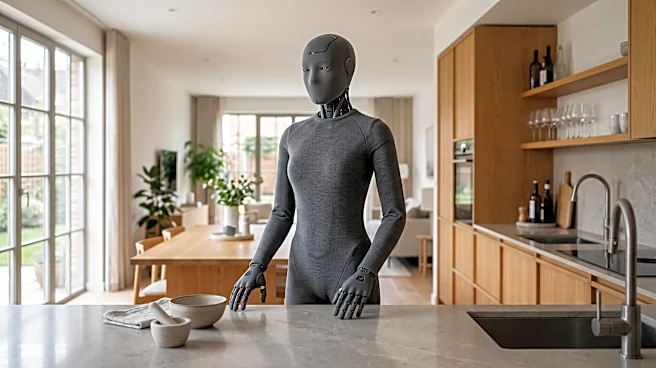
by demonstrating human-like behaviors and collecting data to help robots learn complex real-world tasks. The role involves using teleoperation tools, virtual reality (VR), and simulation environments to teach robots new skills and assess their performance. Robot Teachers will collaborate with engineers and researchers to design, test, and refine robotic skills, providing hands-on observations to improve robot design and task usability. The position requires setting up, calibrating, and maintaining robotic workstations in both laboratory and home-like settings, documenting experiments, and adhering to safety procedures when handling robotic equipment.
Why It's Important?
This initiative by HireArt highlights a growing trend in the robotics industry: the need for human interaction to refine and advance artificial intelligence in robotic systems. The development of 'Robot Teachers' underscores the critical role of human input in bridging the gap between theoretical robotic capabilities and practical, real-world application. By employing individuals to demonstrate complex manipulation tasks and collect training data, companies aim to enhance robot learning and capabilities, making these systems more adaptable and efficient. This approach could significantly impact various U.S. industries, including manufacturing, logistics, and healthcare, by accelerating the deployment of more sophisticated and reliable robotic solutions. The demand for such specialized roles also indicates a shift in the labor market, creating new job categories focused on human-robot collaboration and training.
What's Next?
The recruitment of Robot Teachers suggests a continued investment in human-in-the-loop training methodologies for advanced robotics. As these roles become more established, there could be a greater emphasis on developing standardized training protocols and tools for human-robot interaction. The insights gained from these 'teachers' will likely inform future iterations of robotic design and AI algorithms, leading to more intuitive and capable machines. This could also pave the way for broader adoption of robotics in everyday environments, requiring further development in user-friendly interfaces and safety mechanisms. The success of this program could influence educational institutions to develop curricula that prepare individuals for careers in human-robot collaboration and AI training.
Beyond the Headlines
The emergence of 'Robot Teachers' raises deeper questions about the evolving relationship between humans and artificial intelligence. This role signifies a move beyond simply programming robots to actively 'teaching' them, blurring the lines between traditional human instruction and machine learning. It highlights the ethical considerations of developing autonomous systems that learn from human behavior, including the potential for biases to be inadvertently transferred. Furthermore, the need for human teachers in robotics suggests that despite rapid advancements in AI, human intuition, adaptability, and problem-solving skills remain indispensable for training complex systems. This development could also spark discussions about the future of work, as new hybrid roles emerge that combine technical expertise with human-centric skills like empathy and observation, ultimately shaping how we interact with technology in the coming decades.