



What's Happening?
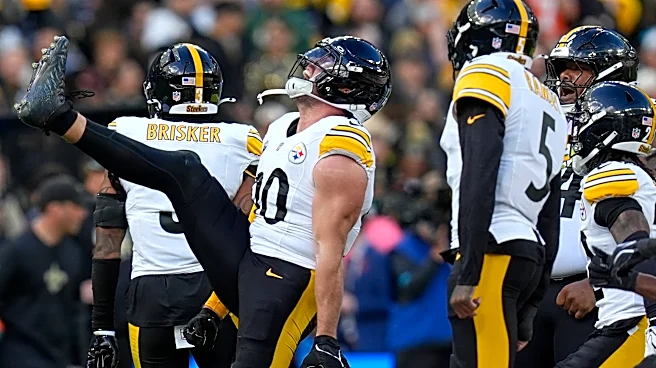
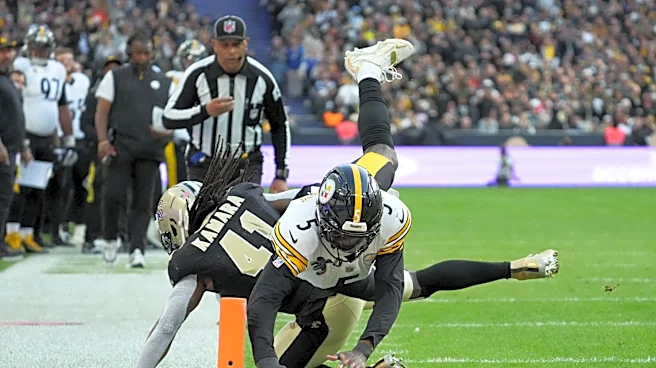
Pittsburgh Steelers Offensive Coordinator Brian Angelichio acknowledged the efficiency issues surrounding wide receiver DK Metcalf following the team's 16-10 victory over the New Orleans Saints. Metcalf caught only two of six targets for 56 yards, with
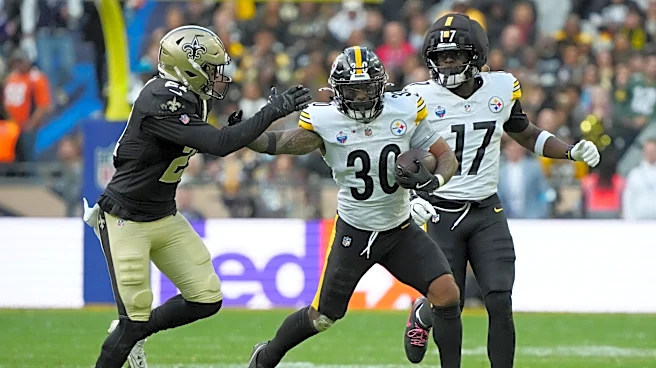
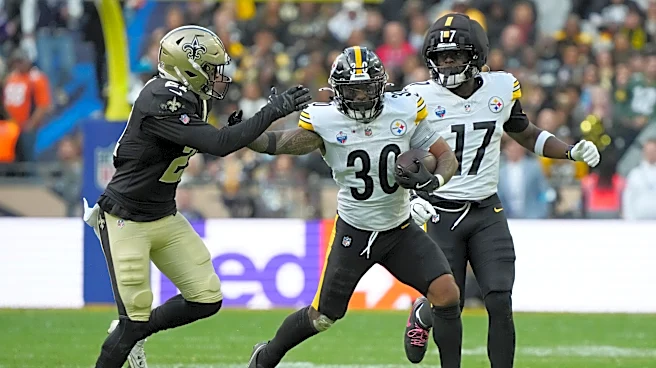
51 of those yards coming on a single play that led to the Steelers' only touchdown. Angelichio defended the team's strategy, explaining that defenses focusing on Metcalf create opportunities for other players, particularly the running backs. In the game against the Saints, running backs Rico Dowdle and Jaylen Warren were heavily involved in the passing game, combining for nine catches and 81 yards. Dowdle matched Metcalf's six targets and led the team in receptions. Angelichio emphasized that the team aims to be efficient with targets and will spread the ball around when defenses commit to taking away a primary receiving threat. He highlighted the luxury of having running backs like Dowdle and Warren who can step up and contribute significantly to the offense, both in receiving and rushing, as seen in their combined 223 yards from scrimmage against the Saints.
Why It's Important?
This development highlights a critical strategic challenge for NFL offenses: balancing the utilization of star players with exploiting defensive adjustments. For the Steelers, effectively integrating DK Metcalf, a high-profile acquisition, into their offensive scheme is crucial for maximizing their investment and overall team performance. When defenses heavily commit to neutralizing a player of Metcalf's caliber, it can open up opportunities for other offensive weapons. The Steelers' ability to leverage their running backs in the passing game, as demonstrated against the Saints, provides a valuable counter-strategy. This approach can force defenses to reconsider their coverage priorities, potentially creating more favorable matchups for Metcalf in future games. However, relying too heavily on check-downs and short completions, while keeping the offense alive, may not consistently generate the explosive plays needed for high-scoring performances. The balance between efficiency and explosiveness will be key for the Steelers' offensive success, impacting their ability to compete in a challenging AFC North division and potentially influencing their playoff aspirations.
What's Next?
The Steelers face the challenge of refining their offensive strategy to ensure both efficiency and explosiveness. Offensive Coordinator Brian Angelichio's comments suggest a continued focus on adapting to defensive schemes, utilizing all available offensive weapons. The team will need to find ways to make opponents fear the underneath game enough to prevent them from overloading coverage on Metcalf, while also ensuring Metcalf remains a credible deep threat. This involves not only the running backs but also other receivers and tight ends becoming more consistent options in the passing game. The upcoming schedule, including a divisional clash with the Cleveland Browns, will test the Steelers' ability to implement these adjustments. The coaching staff will likely continue to analyze how defenses are playing Metcalf and develop game plans that exploit those tendencies, aiming to create a more balanced and unpredictable offense. The long-term success of the Steelers' passing game will depend on their ability to make defenses pay for either focusing too much on Metcalf or neglecting other playmakers.
Beyond the Headlines
The strategic dilemma faced by the Steelers regarding DK Metcalf's usage reflects a broader trend in modern NFL offenses where defensive coordinators are increasingly adept at neutralizing star players. This forces offensive coordinators to innovate and diversify their play-calling. The Steelers' approach of leveraging their running backs as significant receiving threats, while a practical solution, also underscores the evolving role of running backs in the league. They are no longer solely ground-gaining specialists but are increasingly expected to contribute as pass-catchers, creating mismatches and extending drives. This shift in offensive philosophy can have long-term implications for player development and roster construction across the NFL, emphasizing versatility and multi-faceted skill sets. Furthermore, the ongoing challenge of integrating a star player like Metcalf into an offense, especially when defenses are designed to limit his impact, highlights the constant chess match between offensive and defensive minds in professional football, pushing the boundaries of strategic innovation.