







What's Happening?
Gold prices have remained stable above $4,000 per ounce, despite ongoing geopolitical tensions in the Middle East and fluctuating oil prices. According to Ole Hansen, Head of Commodity Strategy at Saxo Bank, gold's resilience is attributed to investors
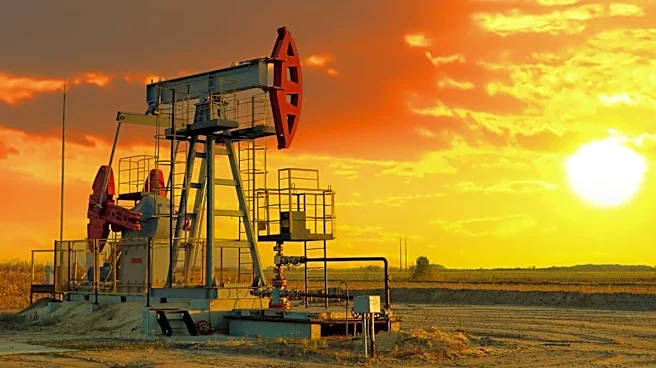
looking beyond immediate inflation fears. The breakdown of peace talks between the U.S. and Iran has led to renewed military strikes, pushing Brent crude prices above $80 a barrel. Despite these challenges, gold has maintained its position as a safe-haven asset, with investors showing reluctance to sell amid inflationary pressures.
Why It's Important?
The stability of gold prices in the face of geopolitical and economic uncertainties underscores its role as a hedge against inflation and market volatility. As inflation fears persist, driven by energy price fluctuations, gold's appeal as a defensive asset remains strong. This situation highlights the complex interplay between geopolitical events, energy markets, and investor sentiment. For the U.S. economy, the resilience of gold prices may reflect broader concerns about inflation's impact on economic growth and monetary policy. The Federal Reserve's response to these dynamics will be closely watched by market participants.
What's Next?
Looking ahead, the gold market is expected to continue its consolidation as investors await further economic data and geopolitical developments. The Federal Reserve's monetary policy decisions, particularly regarding interest rates, will be a key factor influencing gold prices. Additionally, any escalation in Middle East tensions could further impact energy markets and, by extension, gold prices. Analysts will also monitor inflation trends and their potential effects on consumer spending and economic activity.