




What's Happening?
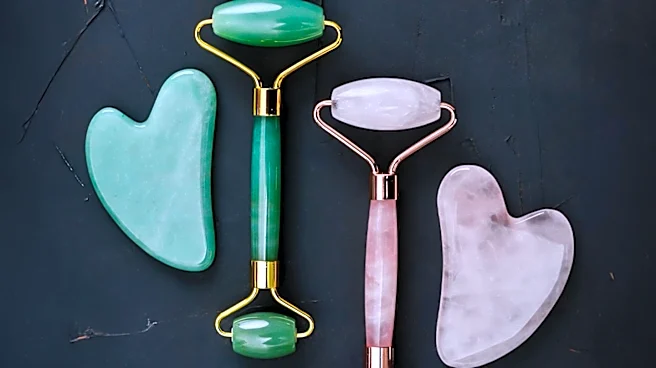
A stainless steel Gua Sha tool is being marketed for facial sculpting, jawline lifting, and face massage. This product, available through online retailers, is presented as a durable option for skin care. The tool's design is intended to facilitate traditional
Gua Sha techniques, which involve scraping the skin with a massage tool to improve circulation and promote lymphatic drainage. The marketing emphasizes its utility for enhancing facial contours and providing a massage experience. The product is described as a single piece of stainless steel, highlighting its durability and suitability for repeated use in a skincare regimen.
Why It's Important?
The availability and marketing of such tools reflect a growing consumer interest in at-home beauty and wellness practices, particularly those rooted in traditional techniques. This trend impacts the beauty and personal care industry by driving demand for specialized tools and products that promise non-invasive cosmetic benefits. For consumers, these tools offer an accessible and potentially cost-effective alternative to professional treatments for facial sculpting and relaxation. The emphasis on durability and material (stainless steel) also speaks to a consumer preference for long-lasting and hygienic beauty tools, influencing manufacturing and product development in the sector. The rise of such products also highlights a broader shift towards holistic and self-care approaches in beauty.
What's Next?
The continued popularity of at-home beauty devices and traditional wellness practices suggests that similar products will likely proliferate in the market. Manufacturers may focus on developing new materials, ergonomic designs, or incorporating additional features to differentiate their offerings. Retailers will likely expand their selections of such tools, potentially leading to increased competition and innovation in the facial care segment. Consumers can expect to see more educational content and tutorials on how to effectively use these tools, further integrating them into daily skincare routines. The trend could also spur more research into the efficacy of such tools for facial contouring and lymphatic drainage.
Beyond the Headlines
The resurgence of Gua Sha tools in modern beauty routines points to a broader cultural appreciation for ancient wellness practices and their integration into contemporary self-care. This trend also raises questions about the scientific validation of claims regarding facial sculpting and lymphatic drainage, prompting a need for consumers to be discerning about product efficacy. Ethically, the marketing of such tools often taps into societal pressures regarding appearance and anti-aging, highlighting the ongoing dialogue between beauty standards and consumer choices. The shift towards durable, reusable tools like stainless steel Gua Sha also aligns with growing environmental consciousness, as consumers seek alternatives to single-use or disposable beauty products.