





What's Happening?
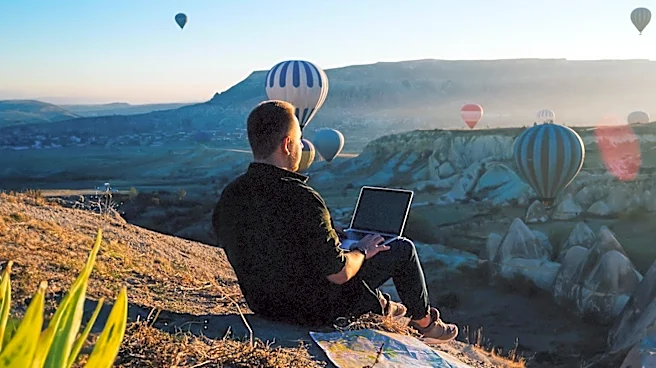
Adewale Adekomaiya, a Senior QA Architect from Nigeria, embarked on a digital nomad journey across Europe with his wife after a near-fatal car accident in Lagos in March 2023. Working remotely for a U.S. company, he utilized a Maltese digital nomad visa,
costing approximately €900, to travel and live in seven European countries over two years. Malta served as their primary base, with monthly rent ranging from €900 to €1,200, plus daily expenses of €500 to €600. The nomadic lifestyle, while offering freedom, led to reduced savings compared to living in Nigeria and revealed gaps in their visa insurance, which did not cover normal childbirth costs in Malta (ranging from €6,000 to €25,000). The couple also encountered instances of racism abroad, including his wife's digital nomad status being disbelieved in Malta.
Why It's Important?
This story underscores the evolving landscape of remote work and its global implications, particularly for U.S. companies employing international talent. The ability of a U.S. company to facilitate a remote employee's digital nomad lifestyle highlights the increasing flexibility and global reach of the American workforce. However, it also brings to light the complexities and challenges faced by digital nomads, such as managing finances across different economies, navigating international healthcare systems, and confronting social issues like racism. For U.S. businesses, understanding these factors is crucial for supporting remote employees effectively and for attracting a diverse global talent pool. The narrative also reflects a broader trend where remote work, accelerated by the pandemic, has enabled individuals from various countries to access opportunities with U.S. firms, contributing to a more interconnected global economy.
What's Next?
After returning to Nigeria for the birth of their son in November 2025, Adekomaiya and his family plan to explore African countries like Kenya, Rwanda, and Tanzania once their child is older. This shift indicates a growing interest among digital nomads in exploring diverse regions beyond traditional European destinations. For U.S. companies with remote employees, this suggests a need to adapt policies and support systems for a workforce that may choose to live and work from an even wider array of international locations. The experience also points to potential future developments in digital nomad visa programs, with countries potentially refining their offerings to address issues like comprehensive healthcare coverage and better integration support for international residents. The family's future travels will require different planning, accounting for their child's needs, which could influence the development of family-friendly digital nomad resources.
Beyond the Headlines
Adekomaiya's journey reveals the profound personal and professional transformations enabled by the digital nomad lifestyle, particularly for individuals from countries with more restricted travel options. His experience with a U.S. company highlights the role of American businesses in fostering global mobility and economic opportunity. However, it also exposes the persistent challenges of racial bias and the financial trade-offs inherent in a nomadic existence, such as the difficulty of long-term financial planning or homeownership. The story prompts a deeper consideration of how U.S. society and businesses can better support a globally distributed workforce, addressing not only logistical needs but also social and cultural integration. It also reflects a broader re-evaluation of what 'home' means in an increasingly mobile world, and the impact of such mobility on individual identity and family life.