






What's Happening?
Actor Chris Hemsworth, known for his role as Thor, recently shared his perspective on what constitutes a good father during an appearance on the 'On Purpose with Jay Shetty' podcast. Hemsworth highlighted that true authority in parenting stems from embodying
the virtues one wishes to instill in their children, rather than merely verbalizing them. He cited his own father as an example, noting that his father's actions and behavior, characterized by integrity, kindness, and compassion, spoke louder than any words. Hemsworth believes that a good father is someone who is 'true to his word and honest' and 'models their behavior honestly.' This approach emphasizes the importance of consistent, ethical conduct in daily life as the primary method of teaching children values.
Why It's Important?
Hemsworth's insights into fatherhood underscore a growing trend in modern parenting that prioritizes active engagement and behavioral modeling over traditional, rigid roles. This perspective is significant because it highlights the profound impact a father's actions have on a child's development, shaping their understanding of respect, empathy, and accountability. By emphasizing reliability and integrity, Hemsworth points to the creation of a secure environment where children feel safe to grow and make mistakes. This approach can lead to healthier family bonds and equip children with stronger moral compasses and self-discipline, ultimately contributing to more well-adjusted individuals within society. The discussion also resonates with other public figures' views on parenting, suggesting a broader cultural shift towards more thoughtful and present fatherhood.
What's Next?
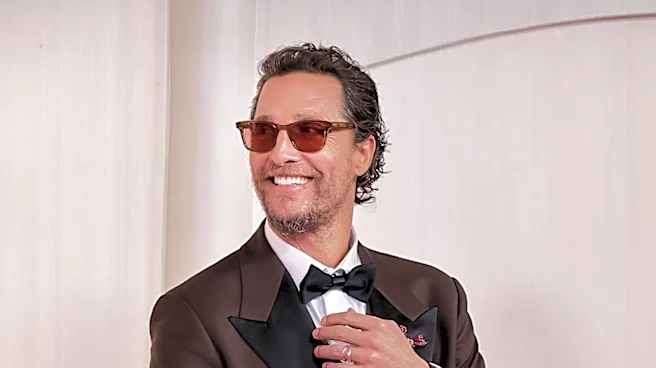
The discussion around Chris Hemsworth's views on fatherhood is likely to continue to influence conversations about parenting styles and the evolving role of fathers in contemporary society. As public figures like Hemsworth, Nick Jonas, and Matthew McConaughey share their personal approaches, it contributes to a broader dialogue that encourages fathers to be more actively involved and intentional in their parenting. This could lead to increased awareness and adoption of parenting strategies that prioritize behavioral modeling, integrity, and emotional presence. The emphasis on reliability and consistency in a father's actions may also inspire more resources and discussions aimed at helping fathers develop these qualities, fostering stronger family units and more confident children.
Beyond the Headlines
Beyond the immediate discussion of parenting techniques, Hemsworth's emphasis on integrity and action over words touches upon deeper ethical and cultural dimensions of personal responsibility. His perspective suggests that the most effective way to transmit values is through consistent, lived example, rather than mere instruction. This has implications not only for family dynamics but also for broader societal leadership and community building, where authenticity and integrity are increasingly valued. The idea that children learn through observation and mimicry highlights the profound responsibility adults, particularly parents, have in shaping the next generation's character. It also subtly critiques a culture that might sometimes prioritize rhetoric over genuine conduct, advocating for a return to foundational principles of honesty and compassionate behavior as cornerstones of personal and familial well-being.