







What's Happening?
Nutrition experts are clarifying the common understanding of 'superfoods,' emphasizing that the term, while useful in public discourse, lacks an official scientific definition. According to Frederic Bertley, PhD, an expert in preventive medicine and global
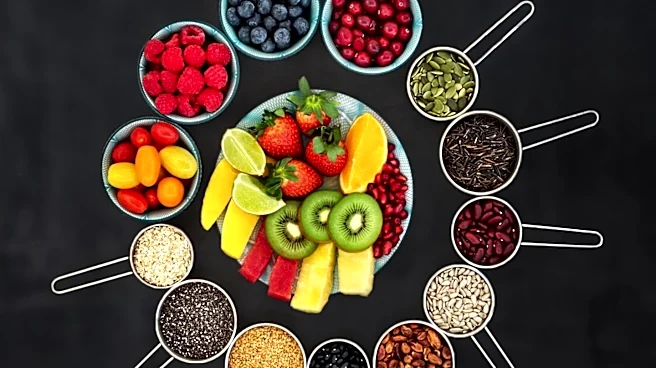
health and President and CEO of the Center of Science and Technology (COSI), a superfood is generically defined as any whole food rich in vitamins, minerals, and antioxidants that support health. Allison Childress, PhD, RDN, CSSD, LD, a clinical dietitian at Texas Tech University, notes that experts often prefer the term 'nutrient-dense' to describe these foods. The experts highlight that many common and affordable foods, such as berries, leafy greens, fatty fish, nuts, seeds, beans, lentils, cruciferous vegetables, sweet potatoes, avocados, tomatoes, green tea, yogurt, eggs, garlic, onions, and dark chocolate, are considered 'superfoods' due to their high nutritional value. They caution against the hype surrounding expensive or exotic ingredients often promoted on social media, stressing that everyday options like frozen berries or canned beans offer comparable benefits.
Why It's Important?
This clarification is important for U.S. consumers as it demystifies the concept of 'superfoods,' shifting the focus from trendy, often costly, ingredients to accessible, everyday foods. By emphasizing nutrient density over marketing claims, it empowers individuals to make informed dietary choices that are both healthy and budget-friendly. The guidance helps combat 'nutrition FOMO' (fear of missing out) and the misconception that only exotic foods can provide significant health benefits. This perspective can lead to more sustainable and practical healthy eating habits across various socioeconomic groups. Furthermore, it underscores that the overall dietary pattern, rather than reliance on a single 'magic' food, is crucial for long-term health, potentially reducing consumer spending on unproven supplements and promoting a balanced approach to nutrition.
What's Next?
Consumers are encouraged to integrate these nutrient-dense foods into their existing diets rather than seeking radical changes. Allison Childress suggests small, consistent upgrades, such as adding berries to breakfast or spinach to soup. The emphasis will likely continue to be on variety and consistency in dietary patterns. Healthcare professionals and nutritionists may increasingly use this clarified definition to guide public health campaigns and individual dietary counseling, promoting a 'food first' approach. The ongoing challenge will be to counter persistent marketing of unproven 'superfood' products and to educate the public on the scientific basis of nutrition, encouraging a focus on whole, unprocessed foods readily available in local markets.
Beyond the Headlines
The discussion around 'superfoods' touches upon broader issues of health literacy, media influence on dietary trends, and the commercialization of wellness. The term's origin in a marketing campaign highlights how language can shape public perception of food and health. The experts' advice to prioritize affordable, versatile, and research-backed foods over trendy, expensive alternatives underscores an ethical dimension in nutrition guidance. It also implicitly critiques the social media landscape, where unverified health claims can proliferate. This shift towards emphasizing the 'overall pattern' of eating rather than individual ingredients promotes a more holistic understanding of health, moving away from quick-fix mentalities and towards sustainable lifestyle changes. It also raises questions about how to effectively communicate complex nutritional science to the public in an era of information overload.