








What's Happening?
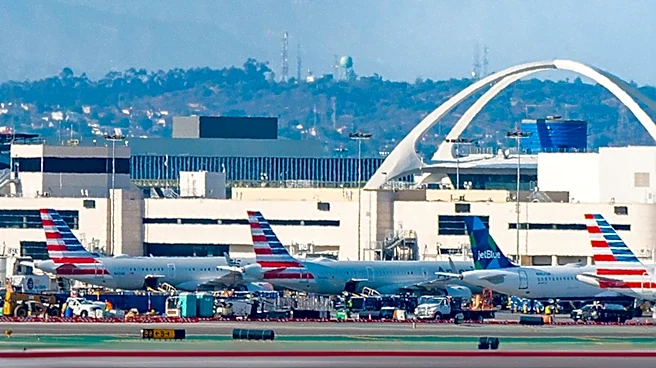
American Airlines has announced its intention to restore Los Angeles International Airport (LAX) as its primary Pacific gateway. This strategic shift reverses a pandemic-era decision that saw the airline reduce its international focus at LAX. The confirmation
came from American Airlines' Chief Commercial Officer, Nat Pieper, during an interview with an aviation blogger. This move could lead to an expansion of international flight options for travelers departing from Los Angeles, signaling a renewed commitment to trans-Pacific routes from the West Coast hub.
Why It's Important?
American Airlines' decision to re-establish LAX as its Pacific gateway holds significant importance for U.S. air travel, particularly for the West Coast. This strategic reversal indicates a renewed focus on the lucrative trans-Pacific market, potentially increasing competition and offering more direct flight options for travelers to Asia and Oceania. For LAX, it solidifies its position as a major international hub, contributing to its economic activity and global connectivity. The move could also impact other airlines operating similar routes, potentially leading to adjustments in their own strategies. For American Airlines, it represents an opportunity to regain market share and strengthen its international network, which was scaled back during the pandemic. This development reflects the airline industry's ongoing recovery and adaptation to post-pandemic travel demands.
What's Next?
In the coming months and years, American Airlines is expected to gradually increase its international flight offerings from LAX, potentially introducing new routes or increasing frequencies on existing ones. Travelers in the Los Angeles area can anticipate more choices for trans-Pacific travel. The airline will likely invest in infrastructure and services at LAX to support this expanded international operation. Competitors will be closely watching American's moves and may respond with their own strategic adjustments to maintain their presence in the Pacific market. The full realization of LAX as a robust Pacific gateway will depend on various factors, including market demand, geopolitical stability, and operational capabilities.
Beyond the Headlines
American Airlines' strategic pivot back to LAX as a Pacific gateway reflects broader shifts in global aviation and economic dynamics. The pandemic forced airlines to re-evaluate their networks, and this move suggests a confidence in the resurgence of international travel, particularly across the Pacific. It also highlights the critical role of major hubs like LAX in facilitating global commerce and cultural exchange. Beyond the immediate impact on flight options, this decision could influence regional economic development, trade relationships, and even cultural ties between the U.S. and Asian countries. The long-term success of this strategy will depend on American Airlines' ability to effectively compete with other major carriers and adapt to evolving passenger preferences and geopolitical landscapes in the Pacific Rim.