





What's Happening?
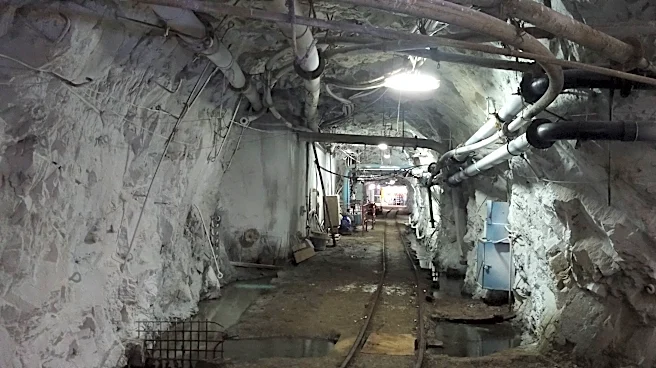
Metals Australia, through its Canadian subsidiary Northern Resources Inc, is advancing plans to establish a battery anode material (BAM) refinery in the Jean-Noël-Tessier industrial park, located north of Baie-Comeau, Quebec. This project is part of a broader
strategy to develop an integrated graphite business, which includes the upstream Lac Carheil mine and a flake graphite concentrate plant. The refinery aims to convert high-purity natural flake graphite concentrate into coated spherical purified graphite (CSPG) for lithium-ion battery anodes. The project is designed with a modular approach, allowing for phased expansion, and is expected to have a nominal design capacity of 75,000 dry tonnes per year of concentrate. The refinery is projected to employ 227 people and has an estimated capital expenditure of $883.8 million. The project is currently progressing towards a final feasibility study, with operations expected to commence in 2030.
Why It's Important?
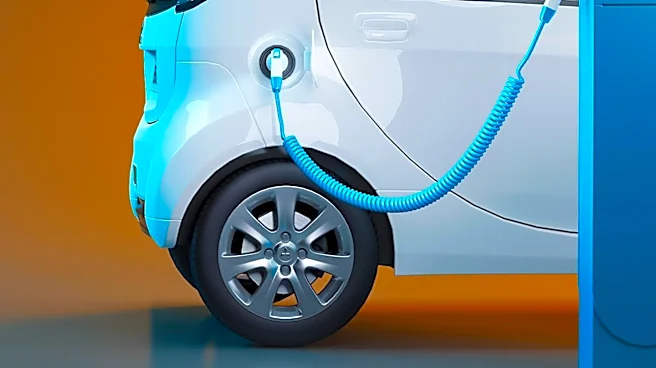
The development of the BAM refinery is significant as it aligns with the growing demand for lithium-ion batteries, driven by the electric vehicle (EV) market. By producing CSPG, a critical component for battery anodes, Metals Australia positions itself to capitalize on the increasing need for sustainable energy solutions. The project not only supports the local economy through job creation but also contributes to the global supply chain of critical minerals. The estimated net present value of $2.05 billion underscores the project's potential profitability and its strategic importance in the transition to cleaner energy technologies. This initiative reflects a broader trend of investment in critical mineral processing facilities, which are essential for reducing dependency on foreign imports and enhancing energy security.
What's Next?
As the project moves towards a final feasibility study, key stakeholders, including engineering and environmental consultants, will continue to refine the project's design and regulatory compliance. The successful completion of the feasibility study will be crucial for securing financing and finalizing construction plans. Stakeholders in the EV and battery manufacturing sectors will likely monitor the project's progress closely, given its potential impact on the supply of battery-grade graphite. Additionally, the project's development may prompt further investments in similar facilities, contributing to the establishment of a robust critical minerals industry in North America.