

What's Happening?
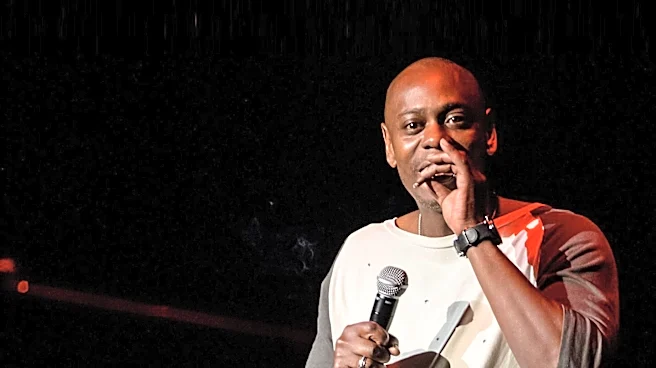
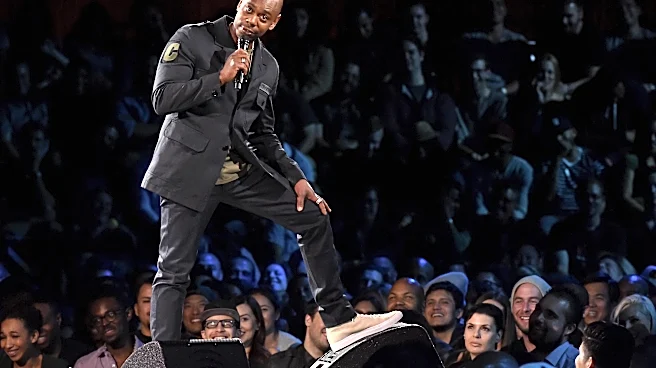
Comedian Dave Chappelle has defended a controversial joke he made during a sold-out show at Madison Square Garden, where he stated he 'felt better' after the assassination of right-wing figure Charlie Kirk. Kirk was reportedly fatally shot in the neck
on September 10, 2025, while speaking at a Turning Point USA event. Chappelle's remarks, which circulated online via a clip, drew immediate criticism. Appearing in Washington D.C., Chappelle denied explicitly saying Kirk's assassination made him 'feel good,' emphasizing that the context of the joke was crucial. He criticized the 'outrage culture' and individuals who pirate shows and then comment without full context, referencing his strict phone-free policy at performances. Chappelle implied that only those who attended the show would understand the true meaning behind his statement, deflecting further questions about the specific context.
Why It's Important?
This incident highlights ongoing tensions surrounding free speech, comedic expression, and public figures' responsibility in the current socio-political climate. Chappelle's defense of his joke, by emphasizing context and criticizing 'outrage culture,' reflects a broader debate about how humor is consumed and interpreted, especially when it touches on sensitive topics like political violence. The controversy also underscores the challenges comedians face in controlling the narrative of their performances in the age of viral clips and social media. The differing reactions, from audience laughter to condemnation from conservative commentators and Kirk's widow, illustrate the deep divisions in public opinion and the varying tolerances for provocative humor. This event could further fuel discussions about the boundaries of comedy and the impact of public statements on political discourse.
What's Next?
The immediate aftermath will likely involve continued public debate and commentary on Chappelle's remarks and his defense. Social media platforms will probably remain a primary arena for these discussions, with supporters and critics further entrenching their positions. It is possible that Chappelle may address the controversy again in future performances or interviews, potentially offering more of the context he claims is missing. The incident could also influence how other comedians approach sensitive political topics in their acts, potentially leading to more cautious or, conversely, more provocative material. The broader conversation about 'cancel culture' and artistic freedom versus public responsibility is also likely to persist, with this event serving as another case study.
Beyond the Headlines
This controversy delves into deeper implications regarding the nature of satire and its reception in a polarized society. Chappelle's insistence on context points to a growing disconnect between artistic intent and audience interpretation, particularly when content is decontextualized and shared online. It raises questions about whether comedy can still effectively push boundaries and challenge norms without being misconstrued or causing widespread offense. Furthermore, the strong reactions from figures like Benny Johnson and Megyn Kelly, and especially from Erika Kirk, underscore the real-world pain and political sensitivities involved when humor intersects with tragedy. This event could contribute to a re-evaluation of how public figures, particularly comedians, navigate the increasingly fraught landscape of political commentary and social discourse, potentially influencing future artistic expressions and public engagement strategies.