








What's Happening?
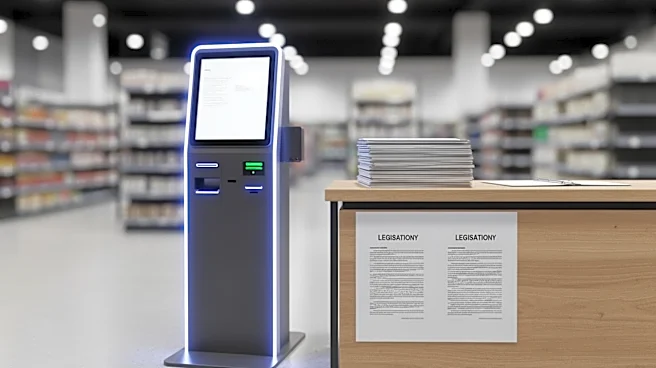
Several U.S. states are considering legislation to regulate the use of self-checkout systems in retail stores, primarily due to concerns about theft and labor implications. States such as Massachusetts, Rhode Island, Connecticut, Ohio, Tennessee, Oklahoma,
Washington, and California have introduced bills that aim to impose restrictions on self-checkout operations. These proposals generally require retailers to maintain a minimum number of staffed checkout lanes, limit the number of self-checkout stations, and enforce transaction-level restrictions, such as capping the number of items per transaction and prohibiting the purchase of age-restricted products through self-checkout. Some bills also address store layout and compliance procedures, requiring self-checkout areas to be observable by store personnel or law enforcement. The trend indicates a growing interest among lawmakers to regulate self-checkout systems, particularly in food and drug retail settings.
Why It's Important?
The proposed legislation reflects a significant shift in how self-checkout systems are perceived by lawmakers, highlighting concerns over potential job losses and increased theft. If enacted, these regulations could impact the operational strategies of retailers, requiring them to adjust staffing models and store layouts. Retailers may face increased costs due to the need for additional staff and potential penalties for non-compliance. The focus on self-checkout also underscores broader societal debates about automation and its effects on employment. As more states consider similar measures, retailers operating across multiple jurisdictions may need to navigate a complex regulatory landscape, potentially affecting their business models and profitability.
What's Next?
Retailers should closely monitor the progress of these bills, as their enactment could necessitate significant operational changes. Businesses may need to engage with lawmakers to express concerns or suggest modifications to proposed regulations. Additionally, retailers might consider investing in technology and training to enhance the security and efficiency of self-checkout systems. As the legislative landscape evolves, companies will need to remain adaptable to comply with varying state and local requirements, which could lead to a patchwork of regulations across the country.