



What's Happening?
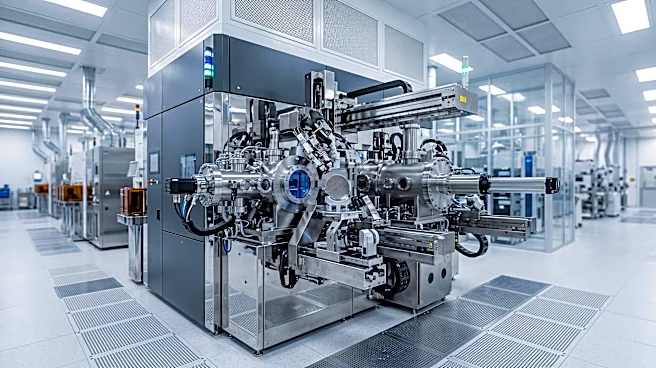
ASML, a leading manufacturer of advanced chip-making machines, reported record-breaking net sales in the third quarter of 2026, reaching 11.7 billion EUR. The company's gross margin exceeded expectations at 57.5%, with a net profit of 5.0 billion EUR. Christophe
Fouquet, President and CEO of ASML, stated that these results reflect the successful implementation of their production scaling plan. Sales in the Installed Base Management segment also surpassed forecasts, hitting 3.3 billion EUR, driven by strong demand for performance-enhancing upgrades. Looking ahead, ASML anticipates net revenues between 14.2 billion and 15.2 billion EUR for Q4 2026, with a gross margin of approximately 57%. For the full year 2026, total net revenues are projected to be between 44 billion and 45 billion EUR, with a gross margin around 56%.
Why It's Important?
The robust performance of ASML is critical for the global technology sector, particularly for U.S. industries reliant on advanced semiconductors. ASML's machines are essential for producing the most sophisticated chips, which are vital components in everything from consumer electronics to artificial intelligence infrastructure and defense systems. The company's announcement that its supply for 2027 and 2028 will not fully meet customer demand, despite plans to increase production capacity by over 30%, highlights a persistent supply-demand imbalance in the semiconductor market. This shortage could impact U.S. tech companies by potentially delaying product launches, increasing manufacturing costs, and hindering innovation, especially in AI-driven applications. The strong demand, fueled by AI investments, underscores the strategic importance of ASML's technology and its direct influence on the competitiveness and growth of U.S. tech giants and the broader economy.
What's Next?
ASML is exploring options to further increase its production capacity for 2028 beyond the previously announced 30% growth, in response to continued high customer demand. Customers are reportedly raising their short- and medium-term equipment demand forecasts, primarily driven by investments in artificial intelligence. Some clients have even expressed interest in placing orders for 2029 and 2030, indicating a sustained long-term demand for ASML's technology. The company will continue to provide significant semiconductor wafer capacity to its customers through performance-enhancing solutions. These efforts to scale production will be crucial in addressing the ongoing global chip shortage and supporting the rapid expansion of AI and other advanced technologies.
Beyond the Headlines
The sustained and increasing demand for ASML's chip-making equipment points to a fundamental shift in global technological infrastructure, driven by the accelerating adoption of artificial intelligence. This trend suggests a long-term boom for the semiconductor industry, but also raises questions about potential bottlenecks and geopolitical implications. The concentration of advanced chip manufacturing capabilities, particularly in the hands of a few key players like ASML, creates strategic vulnerabilities and dependencies. For the U.S., ensuring access to these critical technologies is paramount for national security and economic leadership. The ongoing supply constraints could also spur greater investment in domestic semiconductor manufacturing and research, potentially reshaping global supply chains and fostering new alliances to secure technological independence and resilience.