







What's Happening?
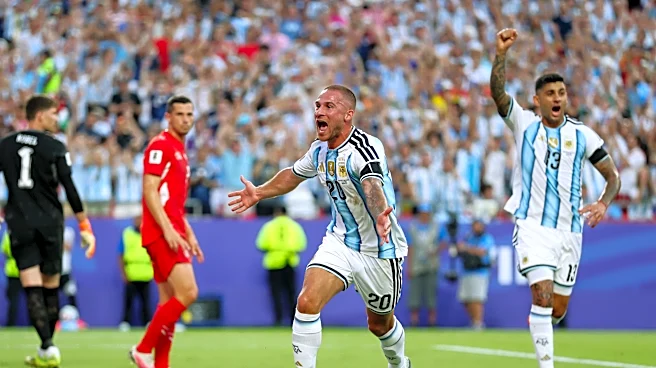
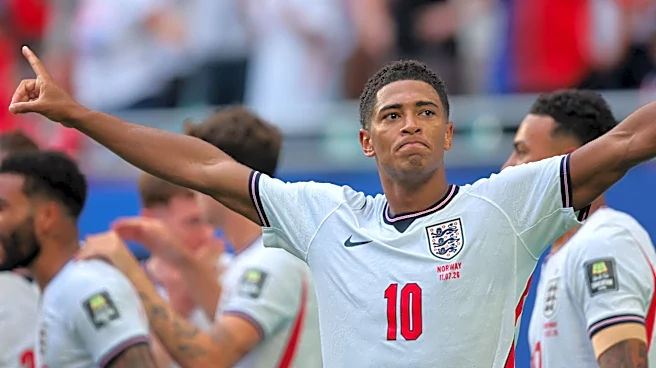
The football rivalry between Argentina and England has been marked by intense matches and significant controversies, particularly during World Cup encounters. One of the most notable incidents occurred during the 1966 World Cup quarter-finals, where England defeated
Argentina in a match filled with disputes. Argentina's captain, Antonio Rattin, was sent off early in the game, leading to a prolonged delay as he refused to leave the pitch. This match, characterized by aggressive play and accusations of unfair officiating, contributed to the introduction of red and yellow cards in football, which were first used in the 1970 World Cup. The rivalry continued in subsequent tournaments, with memorable matches in 1998 and 2002, each adding layers to the competitive history between the two nations.
Why It's Important?
The Argentina-England football rivalry is significant not only for its historical context but also for its impact on the sport's regulations and cultural narratives. The 1966 match highlighted the need for clearer officiating tools, leading to the adoption of red and yellow cards, which have become standard in managing player conduct. This rivalry also reflects broader cultural and national tensions, often transcending the sport itself to influence public sentiment and national pride. The intense competition has fostered a rich narrative that continues to captivate fans and shape the identity of international football.
What's Next?
As both teams continue to compete on the world stage, future encounters are likely to be influenced by the historical context of their rivalry. The evolution of football regulations and the increasing emphasis on fair play may alter the dynamics of their matches. Additionally, the legacy of past controversies may continue to fuel the competitive spirit between the teams, potentially impacting strategies and fan engagement. Observers will be keen to see how this storied rivalry evolves in upcoming tournaments.
Beyond the Headlines
The Argentina-England rivalry underscores the broader cultural and ethical dimensions of international sports. It highlights how historical events can shape the rules and spirit of the game, influencing how sportsmanship is perceived and practiced. The rivalry also serves as a reminder of the power of sports to reflect and sometimes exacerbate national tensions, while also providing a platform for reconciliation and mutual respect through competition.