





What's Happening?
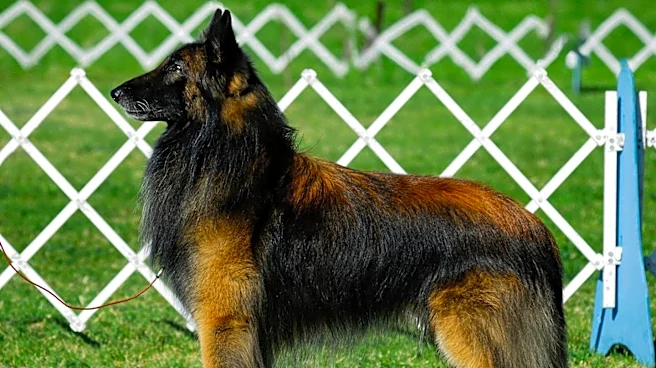
The Greater DeKalb Kennel Club held a dog show on July 4, 2026, in Belvidere, Illinois, attracting a total entry of 572 participants. The event featured various breeds competing for top honors, with the Best In Show awarded to a Brussels Griffon named
GCHB Bobcat Party Like A Rockstar, handled by Paul Catterson. The show was judged by Mrs. Karen S. McFarlane and included categories such as Sporting, Hound, Working, Terrier, Toy, Non-Sporting, and Herding. Each category had its own set of winners, showcasing a diverse range of breeds and handlers. The event was photographed by Wilcox Photo, capturing the highlights of the competition.
Why It's Important?
Dog shows like the Greater DeKalb Kennel Club event play a significant role in the canine community, promoting breed standards and providing a platform for breeders and handlers to showcase their dogs. These events contribute to the local economy by attracting participants and spectators, which can benefit local businesses such as hotels, restaurants, and shops. Additionally, they foster a sense of community among dog enthusiasts and provide opportunities for networking and learning about different breeds. The recognition gained from winning at such events can enhance the reputation of breeders and handlers, potentially leading to increased demand for their dogs.
What's Next?
Following the success of the Greater DeKalb Kennel Club show, participants and organizers will likely prepare for future events, continuing to promote excellence in dog breeding and handling. Winners from this show may go on to compete in larger, national competitions, furthering their dogs' reputations. The American Kennel Club (AKC) will eventually receive the official results, which could influence rankings and qualifications for upcoming shows. The ongoing cycle of dog shows ensures continuous engagement and development within the canine community.
Beyond the Headlines
Beyond the immediate competition, dog shows contribute to the preservation of breed standards and the promotion of responsible breeding practices. They also serve as educational platforms for the public, raising awareness about different breeds and their characteristics. Ethical considerations, such as the treatment and welfare of the dogs, are paramount, with organizers and participants expected to adhere to high standards of care. The cultural significance of dog shows is evident in their long-standing tradition and the passion they inspire among participants and spectators alike.