




What's Happening?
Northrop Grumman and the Canadian Space Agency (CSA) are repurposing their Gateway projects to focus on lunar applications and potential use in low Earth orbit on commercial space stations. Northrop Grumman announced plans to reuse hardware and technologies
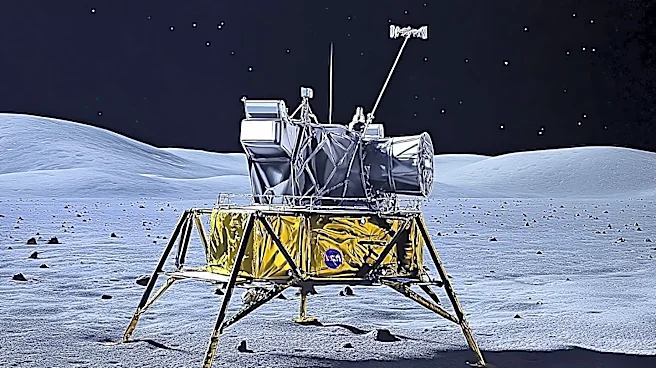
developed for the Habitation and Logistics Outpost (HALO) module for a series of lander missions. These missions, known as Lunar Infrastructure Demo (LID) missions, aim to demonstrate how key surface assets can remain powered and connected through lunar night and shadow, providing NASA with critical data for Artemis surface campaigns. Meanwhile, the CSA is adapting its Canadarm3 robotic arm system for lunar applications and potential use in commercial space stations. The adaptations are part of a broader shift in focus from orbital to surface operations on the Moon.
Why It's Important?
The repurposing of Gateway projects by Northrop Grumman and the CSA signifies a strategic shift in space exploration priorities, emphasizing lunar surface operations over orbital missions. This move aligns with NASA's Artemis program, which aims to establish a sustainable human presence on the Moon. The development of technologies that can withstand the harsh lunar environment is crucial for long-term lunar exploration and potential colonization. Additionally, the adaptation of these technologies for commercial space stations in low Earth orbit could open new opportunities for private sector involvement in space exploration, fostering innovation and economic growth in the space industry.
What's Next?
Northrop Grumman plans to launch the first LID mission during Phase One of NASA's Moon Base plans, which runs through 2029. The missions will be NASA-funded, although specific details about the funding mechanism or cost have not been disclosed. The CSA and MDA Space, the prime contractor for Canadarm3, are working on finalizing the designs and development of the adapted technologies. As these projects progress, they are expected to contribute to the establishment of a robust lunar infrastructure and create new commercialization opportunities linked to emerging space stations.