






What's Happening?
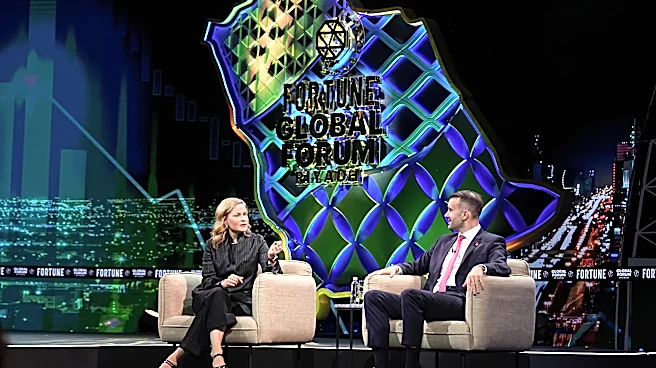
Fortune has announced the confirmed speakers and partners for its Brainstorm AI 2026 conference, scheduled for December 7-8, 2026, at the St. Regis San Francisco. The summit, themed 'AI Eats the World,' aims to gather founders, executives, and investors
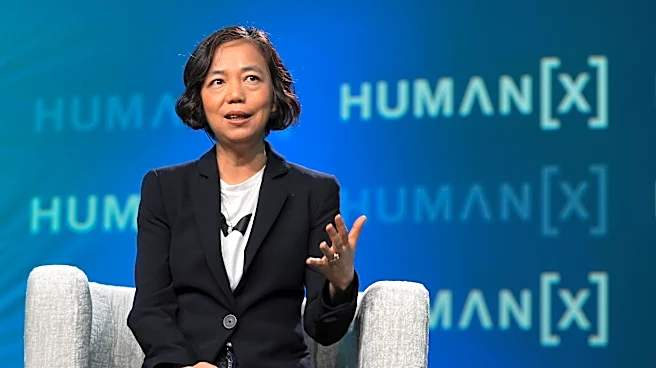
in the artificial intelligence sector to discuss the real challenges and value creation within AI. Featured speakers include Greg Brockman, Co-Founder and President of OpenAI; Fei-Fei Li, Founding Director and Senior Fellow at Stanford Institute for Human-Centered AI; Mustafa Suleyman, Chief Executive Officer of Microsoft AI; and Reid Hoffman, Co-Founder of LinkedIn and Manas AI. The event will delve into questions regarding AI's return on investment, control, and its impact on industries, institutions, and the workforce. The 'Fortune Daily' show will also be on-site to conduct interviews with speakers and attendees.
Why It's Important?
This conference is significant for the U.S. technology and business sectors as it brings together key leaders and innovators in artificial intelligence. The discussions will likely shape future strategies and investments in AI, influencing how U.S. industries adopt and integrate advanced AI technologies. The participation of executives from major companies like OpenAI, Microsoft AI, and LinkedIn underscores the critical role these organizations play in the AI landscape. Insights shared at the event could impact public policy discussions around AI regulation, ethical development, and workforce adaptation. Businesses stand to gain from understanding emerging AI trends and challenges, while investors will be looking for opportunities in the rapidly evolving AI market. The focus on 'real challenges' and 'value creation' suggests a move beyond hype, aiming for practical applications and sustainable growth in the AI domain.
What's Next?
The Brainstorm AI 2026 conference will proceed as scheduled on December 7-8, 2026, in San Francisco. Following the event, insights and discussions from the summit are expected to be disseminated through Fortune's platforms, including the 'Fortune Daily' show and its social channels. These outputs will likely inform ongoing conversations within the AI community, influencing strategic decisions for companies and investors in the coming year. The event's focus on addressing the 'real challenges' of AI suggests that future developments may prioritize practical applications, ethical considerations, and economic impact. Stakeholders, including technology companies, policymakers, and academic institutions, will likely analyze the outcomes of the conference to guide their respective initiatives and investments in artificial intelligence.
Beyond the Headlines
The theme 'AI Eats the World' suggests a profound and potentially disruptive impact of artificial intelligence across all sectors, hinting at a long-term shift in economic and societal structures. The involvement of leaders from both established tech giants and influential AI startups indicates a convergence of innovation and established market power, which could lead to new forms of collaboration or competition. The emphasis on questions like 'who is in control' and 'who gets left behind' highlights the ethical and social dimensions of AI development, pointing to potential debates around job displacement, data privacy, and algorithmic bias. This conference could serve as a bellwether for how the U.S. and global economies will adapt to an increasingly AI-driven future, potentially accelerating discussions on responsible AI governance and inclusive technological advancement.