



What's Happening?
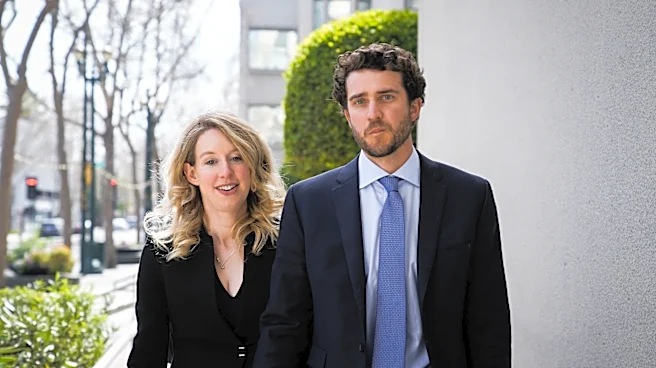
The documentary 'You Can See Everything,' co-directed by Nathan Fielder and Lance Oppenheim, has achieved significant box office success, grossing over $100 million globally on a $7 million production budget. The film, which focuses on Elizabeth Holmes,
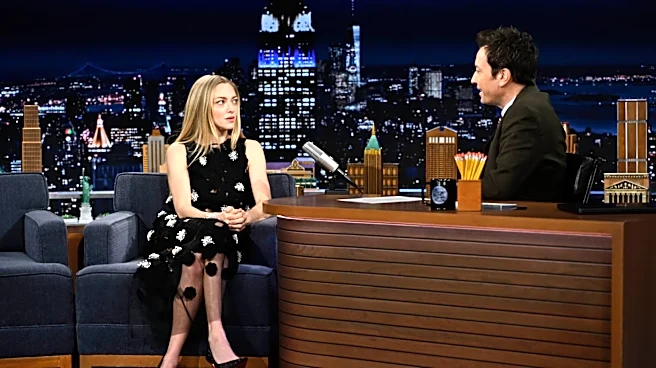
the founder of Theranos, and her partner Billy Evans, has been described as one of the top ten documentaries of all time. Despite its commercial triumph and a daunting three-hour runtime, the film has sparked critical debate regarding its approach to Holmes' story. The documentary delves into Holmes' domestic life before her prison sentence, featuring intimate access to her, her children, and Evans. A key aspect of the film involves Fielder tracking down actress Amanda Seyfried, who portrayed Holmes in the Hulu series 'The Dropout,' to assist in reconstructing unfilmed meetings. This includes a dramatic confrontation between Fielder, Seyfried, and Evans, where Evans' alleged demand for a cut of the film's profits is revealed, creating a central point of contention and entertainment in the documentary.
Why It's Important?
The commercial success of 'You Can See Everything' challenges the conventional wisdom that documentaries struggle to generate significant revenue, demonstrating a substantial market for non-fiction cinema. This could encourage more investment in documentary filmmaking, potentially leading to a broader range of impactful stories reaching wider audiences. The film's focus on Elizabeth Holmes and the Theranos scandal continues to highlight critical issues within the U.S. business and tech sectors, particularly concerning corporate ethics, investor due diligence, and the consequences of fraudulent practices. The documentary's intimate portrayal of Holmes' personal life and the involvement of her partner, Billy Evans, raises questions about the public's fascination with high-profile figures involved in scandals and the ethical boundaries of documentary filmmaking. The film's narrative, particularly the confrontation with Evans, underscores the complexities of accountability and the differing perspectives surrounding the Theranos saga, impacting public perception of those involved.
What's Next?
The continued success of 'You Can See Everything' on streaming platforms in the U.S. suggests it will maintain its cultural relevance and potentially influence future documentary projects. The film's critical reception, which includes both acclaim and skepticism regarding its narrative choices, may prompt further discussions within the filmmaking community about journalistic integrity and the portrayal of controversial subjects. The revelations within the documentary, particularly concerning Billy Evans' alleged financial demands and his on-screen portrayal, could lead to ongoing public discourse and scrutiny of his role in the Theranos aftermath. The film's impact on the public's understanding of the Theranos scandal and Elizabeth Holmes' culpability will likely evolve as more viewers engage with the documentary and its controversial elements.
Beyond the Headlines
The documentary 'You Can See Everything' delves into the ethical complexities of storytelling, particularly when dealing with real-life figures involved in high-stakes legal and public dramas. The film's use of reconstructions and the involvement of an actress like Amanda Seyfried blur the lines between documentary and reality television, raising questions about authenticity and manipulation in non-fiction media. The narrative's focus on Billy Evans and the suggestion of his controlling influence introduces a deeper layer to the Theranos story, potentially shifting public perception of Elizabeth Holmes' agency and the dynamics within her personal and professional life. The film also implicitly critiques the legal and financial systems, highlighting how individuals involved in scandals might still seek to profit from their stories, even while facing legal repercussions. This raises broader societal questions about justice, accountability, and the commodification of personal narratives in the media landscape.