





What's Happening?
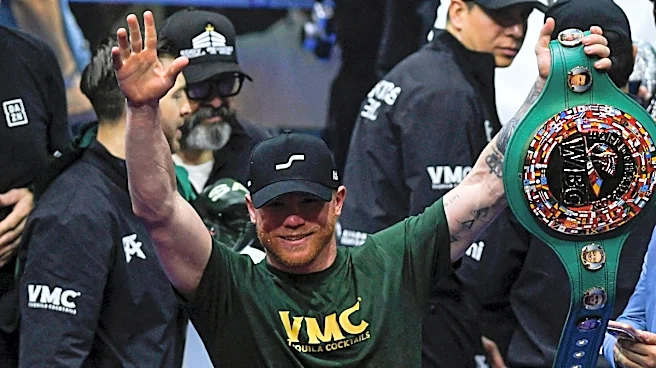
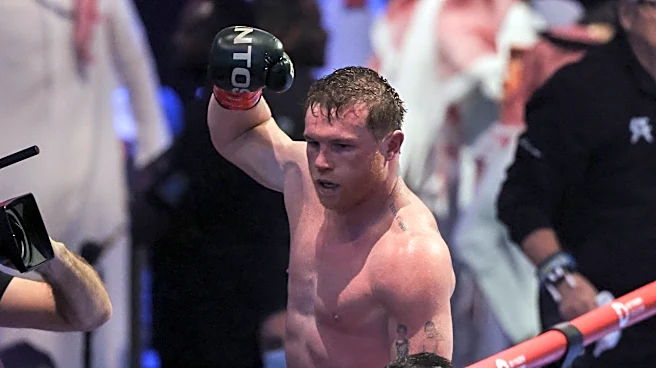
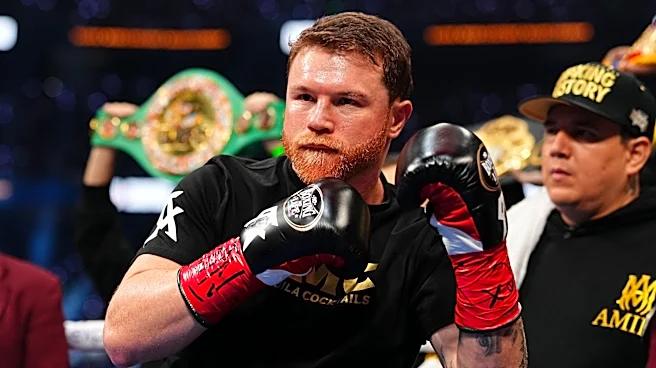
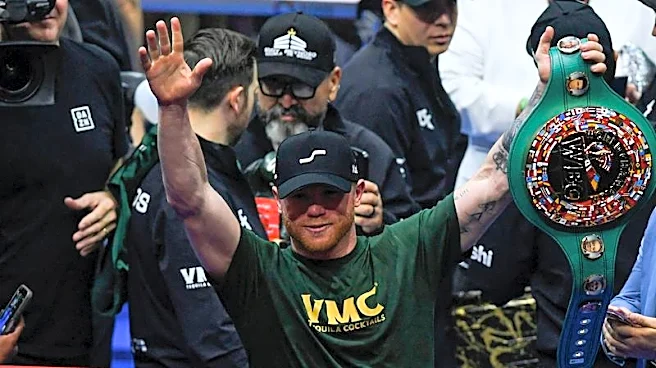
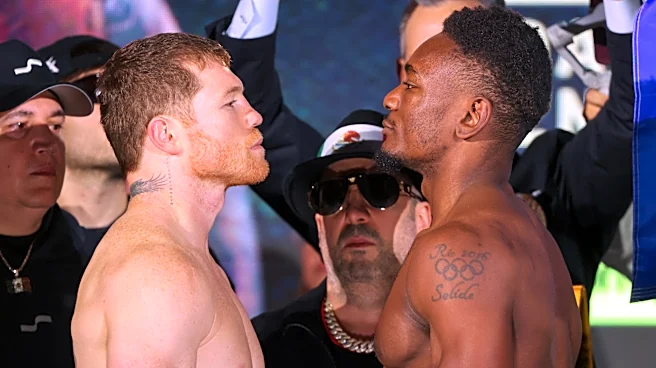
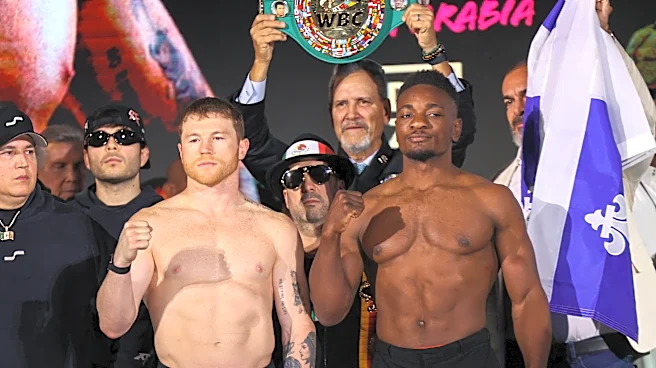
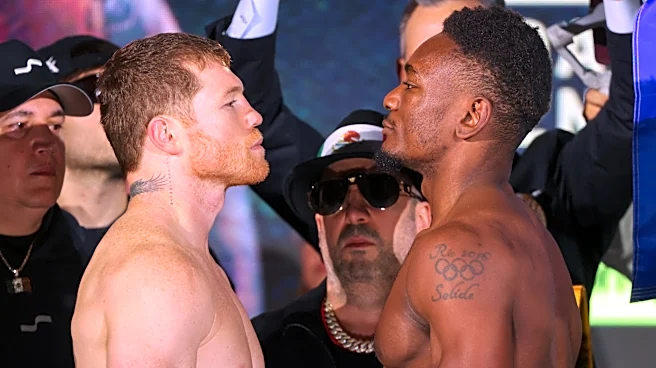
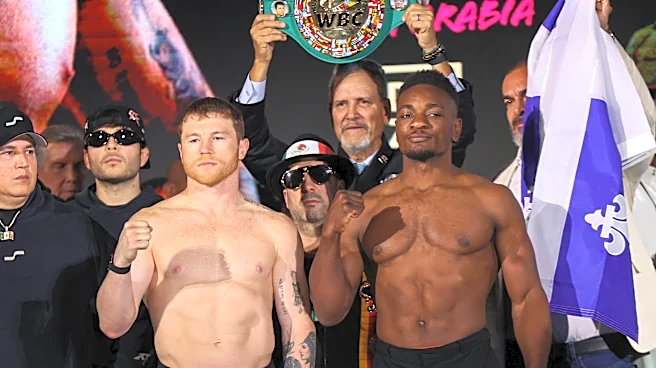
Mexican boxer Canelo Alvarez demonstrated exceptional calm and skill in Riyadh, Saudi Arabia, as he successfully defended his WBC super middleweight title against Christian Mbilli. The fight took place under the shadow of ongoing threats from Iranian-supported
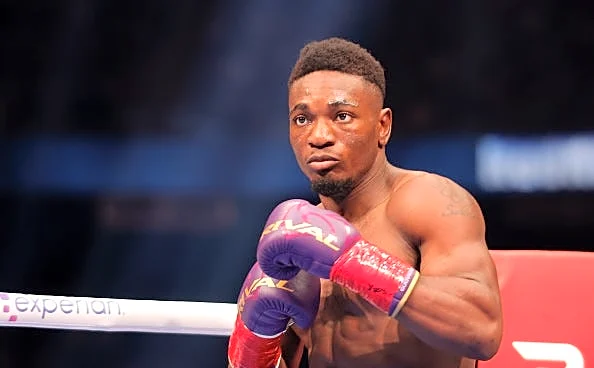
Houthi rebels, which had prompted emergency alerts and warnings for residents to remain vigilant. Despite the volatile environment, Alvarez, with a career spanning 69 professional fights, maintained focus throughout the bout. Mbilli, initially seen as a stylistic challenge due to his physical strength and high output, started aggressively in the early rounds. However, Alvarez systematically defused Mbilli's attacks, often inviting pressure to counter effectively. By the later rounds, Alvarez had nullified Mbilli's offense, ultimately securing a unanimous decision victory with scores of 115-112, 116-111, and 117-110.
Why It's Important?
Canelo Alvarez's victory in Riyadh, particularly under the prevailing security threats, highlights the resilience of athletes and the boxing world in continuing major events despite external pressures. This event underscores the significant financial and logistical commitments involved in hosting international sporting spectacles, even in challenging geopolitical contexts. For Alvarez, the win reinforces his status as one of boxing's elite, demonstrating his ability to perform under extreme pressure both inside and outside the ring. For the sport of boxing, it showcases its capacity to draw global attention and maintain its schedule, albeit with heightened security concerns. The event also brings attention to the broader implications of hosting international events in regions experiencing conflict, raising questions about athlete safety and the ethics of such decisions.
What's Next?
Following his victory, Canelo Alvarez is expected to assess his next career moves, with potential opponents and title defenses on the horizon. His performance against Mbilli, particularly his composure, will likely enhance his marketability for future high-profile bouts. The boxing world will be watching to see if Riyadh continues to host major boxing events, given the security situation, and what measures might be implemented to ensure the safety of participants and attendees. Promoters and sanctioning bodies will need to consider the geopolitical landscape when scheduling future international fights. For Christian Mbilli, this loss will be a learning experience, and he will likely aim to rebuild his record to contend for another title shot in the future.
Beyond the Headlines
Beyond the immediate sporting outcome, Alvarez's fight in Riyadh offers a stark illustration of the intersection between global sports and geopolitical realities. The decision to proceed with such a high-profile event in a city under threat raises ethical considerations about the safety of athletes, support staff, and spectators. It also highlights the complex motivations behind hosting major sporting events in such regions, often involving significant financial incentives and efforts to project an image of normalcy or resilience. The narrative of Alvarez's 'calm under fire' can be interpreted as both a testament to his mental fortitude and a reflection of the broader human capacity to adapt and perform amidst adversity. This event serves as a reminder that sports, while often seen as an escape, are inextricably linked to the political and social environments in which they occur, sometimes becoming symbols of defiance or normalization in turbulent times.