





What's Happening?
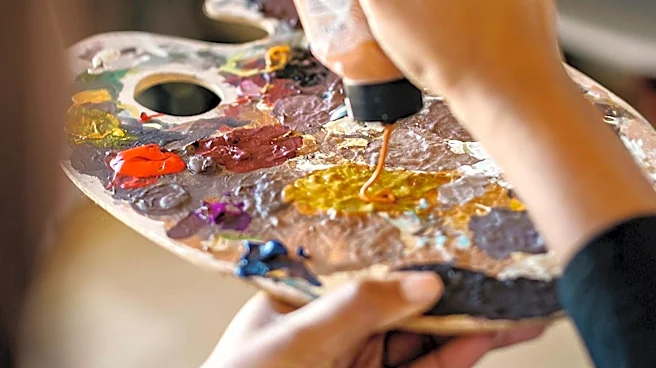
Chris Kawage, a local artist in Papua New Guinea, has successfully transitioned from a 16-year military career to become a full-time painter. After serving in the Papua New Guinea Defence Force from 1989, he was downsized due to age requirements. In 2006,
Kawage decided to pursue his passion for art, a skill passed down from his father, contemporary artist Matius Kawage. He had previously studied Fine Arts at the National Arts School from 1985 to 1988. Despite initial difficulties, he established 'Chris Kawage Arts,' which now supplies paintings to hotels and restaurants in Port Moresby. His artwork, which often connects to Papua New Guinean traditions and culture, has gained international attention, including an instance where a visitor traveled from Italy specifically to meet him after seeing one of his paintings overseas. Kawage has also participated in international art festivals in the Solomon Islands and Australia.
Why It's Important?
Chris Kawage's journey highlights the potential for individuals to create sustainable livelihoods through art, even in challenging economic environments. His success in building 'Chris Kawage Arts' demonstrates entrepreneurial spirit and resilience, providing a model for other artists in Papua New Guinea. The international recognition of his work, such as the visitor from Italy, underscores the global appeal of unique cultural art forms and their potential to attract tourism and cultural exchange. Furthermore, Kawage's observations about the disparity in artist recognition and compensation between Papua New Guinea and countries like Australia bring attention to the need for greater governmental support and infrastructure for local artists to thrive and receive fair value for their creations. His story also emphasizes the importance of preserving and promoting indigenous art and culture as a source of economic and social value.
What's Next?
Chris Kawage is expected to continue expanding his art business, 'Chris Kawage Arts,' potentially seeking further opportunities to showcase his work internationally and within Papua New Guinea. His efforts to teach his wife to paint and manage sales suggest a focus on family involvement and business growth. There is a potential for increased advocacy from Kawage and other local artists for greater government recognition and support for the arts sector in Papua New Guinea, possibly leading to the establishment of more galleries, associations, and fair pricing structures. His continued success could inspire more individuals to pursue art as a viable career path, contributing to the cultural and economic development of the region. The story also implies a continued focus on creating art that reflects and preserves Papua New Guinean traditions and culture.
Beyond the Headlines
Chris Kawage's narrative extends beyond a personal success story, touching upon broader themes of cultural preservation, economic empowerment, and the role of art in national identity. His emphasis on the stories and cultural connections embedded in Papua New Guinean artwork highlights art as a vital medium for transmitting heritage. The contrast he draws between the support for artists in Australia and the struggles faced by those in Papua New Guinea raises ethical questions about equitable compensation for cultural producers in developing nations. His experience also underscores the transformative power of art as a therapeutic and vocational outlet for individuals transitioning from demanding careers, such as military service. The international interest in his work suggests a global appetite for authentic cultural expressions, which, if properly supported, could become a significant soft power asset for Papua New Guinea.