



What's Happening?
Mentions of 'inflation' or 'inflationary' on the earnings calls of S&P 500 companies reached 820 in October, marking the highest monthly figure since February 2024. This surge indicates a growing concern among corporate America regarding rising costs
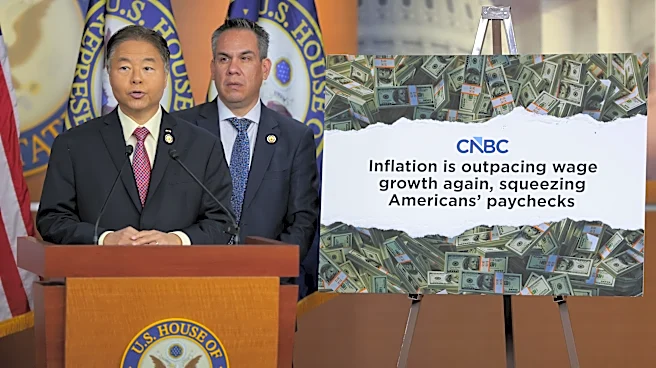
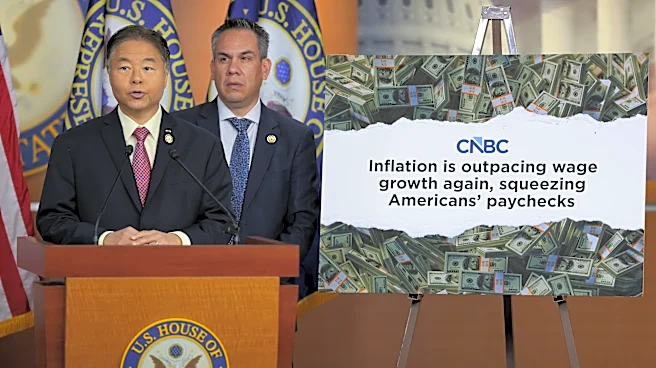
and their impact on business operations and consumer confidence. Industrial companies accounted for a quarter of these references, primarily due to high energy and logistics expenses. Companies across various sectors, from paint manufacturers like PPG Industries to spice manufacturers like McCormick & Co, are evaluating the effects of increasing prices. General Motors anticipates a $2 billion headwind in 2026 from higher commodity, logistics, and memory prices. Even typically resilient sectors, such as banking, are noting inflation as a persistent headwind affecting both consumers and commercial clients, as stated by Wells Fargo CEO Charles W Scharf. The latest U.S. personal income and spending data also suggest a challenging consumer landscape, with inflation outpacing income growth.
Why It's Important?
The renewed focus on inflation by S&P 500 companies signals potential challenges for the U.S. economy and consumers. Rising costs for raw materials, fuel, and logistics directly impact corporate margins, potentially leading to higher prices for consumers or reduced profitability for businesses. This trend could further strain household budgets, especially as income growth struggles to keep pace with inflation, painting a troubling picture for consumer spending. The broad-based nature of these concerns, affecting industrial, materials, consumer, and even financial sectors, suggests a systemic issue rather than isolated incidents. For investors, these discussions highlight potential risks to earnings forecasts and stock valuations, prompting companies to detail mitigation strategies like price increases. The persistence of inflationary pressures could influence monetary policy decisions, as central banks monitor these trends to assess economic stability.
What's Next?
As the earnings season continues, more companies are expected to address inflationary pressures and their strategies to manage them. This ongoing dialogue will provide further insights into the breadth and depth of the issue across various industries. Companies like PPG Industries have already outlined plans for price increases, indicating that consumers may face higher costs for goods and services in the near future. The impact on consumer spending will be closely watched, as it is a critical driver of the U.S. economy. Policymakers and economists will likely scrutinize these corporate reports for signs of sustained inflation, which could influence future interest rate decisions and broader economic forecasts. The cost of living remains a central theme, and its trajectory will continue to be a significant factor for both businesses and households.
Beyond the Headlines
The resurgence of inflation concerns extends beyond immediate financial impacts, touching upon broader economic stability and consumer welfare. Persistent inflation can erode purchasing power, disproportionately affecting lower-income households and potentially widening economic inequality. For businesses, navigating these cost pressures requires strategic adjustments, including supply chain optimization, innovation in product development, and careful pricing strategies to maintain competitiveness without alienating customers. The discussions also highlight the interconnectedness of global supply chains and geopolitical events, such as oil price fluctuations, which can quickly translate into domestic economic challenges. This environment could also spur greater demand for wage increases, potentially creating a wage-price spiral if not managed effectively, posing a complex challenge for economic policymakers aiming to achieve price stability while supporting economic growth.