



What's Happening?
The global deep learning market is projected to experience substantial growth, with its value expected to reach approximately $261.3 billion by 2034, up from $25.5 billion in 2024. This represents a compound annual growth rate (CAGR) of 26.2% during the
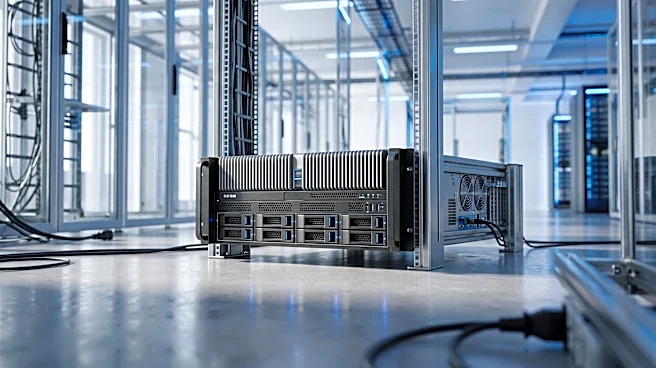
forecast period from 2025 to 2034. Deep learning, a subset of artificial intelligence, utilizes multilayer neural networks for various applications such as image recognition, speech processing, and generative AI. North America currently holds a dominant position in this market, accounting for over 33.9% of the share and generating $8.64 billion in revenue in 2024. The market encompasses hardware, software, and services, with software being the largest solution category in 2024. The demand for AI compute capacity is significant, with Stanford HAI estimating global AI compute capacity reached 17.1 million H100-equivalents by the end of 2025. This surge in demand has also led to a 50% increase in electricity use at AI-focused data centers in 2025, highlighting power availability and efficiency as critical deployment constraints.
Why It's Important?
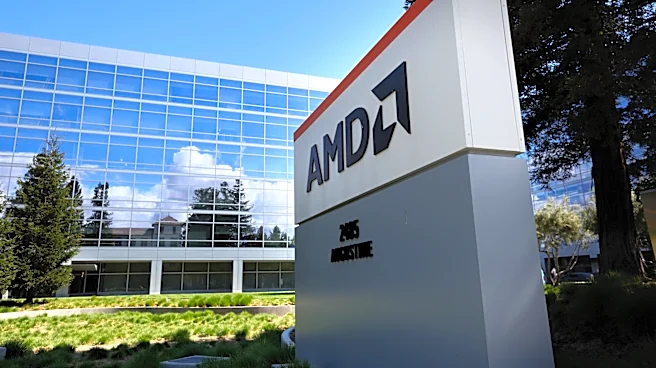
The rapid expansion of the deep learning market signifies a transformative period for U.S. industries and the global economy. The substantial growth forecast indicates increasing integration of AI technologies across various sectors, from automotive to healthcare. For U.S. businesses, particularly those in technology and semiconductors, this presents significant opportunities for innovation and market leadership. Companies like Advanced Micro Devices (AMD) and NVIDIA are key players, providing the foundational hardware and software necessary for deep learning advancements. The rising electricity consumption by AI data centers also underscores a growing challenge for energy infrastructure and sustainability efforts, potentially driving investments in more efficient power solutions and renewable energy sources. The dominance of North America in this market suggests continued U.S. leadership in AI research, development, and deployment, attracting talent and investment to the region.
What's Next?
Looking ahead, the deep learning market is expected to continue its upward trajectory, driven by ongoing advancements in AI models and increasing enterprise adoption. The competition among chip vendors, cloud platforms, and application providers will likely intensify, fostering further innovation in hardware and software solutions. Companies like AMD are positioning themselves as strong challengers to established leaders, offering integrated platforms that simplify deployment for cloud providers. Addressing the growing energy demands of AI data centers will be a critical next step, potentially leading to new policies and technological developments focused on energy efficiency and sustainable computing. Furthermore, the continuous evolution of deep learning applications, particularly in areas like generative AI and image recognition, will open new market segments and create demand for specialized skills and infrastructure.
Beyond the Headlines
The explosive growth of the deep learning market extends beyond mere economic figures, touching upon profound societal and ethical implications. The widespread adoption of AI, powered by deep learning, raises questions about job displacement, data privacy, and algorithmic bias. As AI becomes more integrated into daily life, the ethical frameworks governing its development and deployment will become increasingly crucial. The significant energy consumption of AI data centers also highlights the environmental footprint of technological progress, prompting a broader discussion on sustainable AI and green computing initiatives. Moreover, the concentration of AI development and infrastructure in regions like North America could exacerbate existing geopolitical and economic disparities, emphasizing the need for equitable access to AI technologies and expertise globally. The future of deep learning will not only be shaped by technological breakthroughs but also by how societies choose to govern and integrate these powerful tools.