


What's Happening?
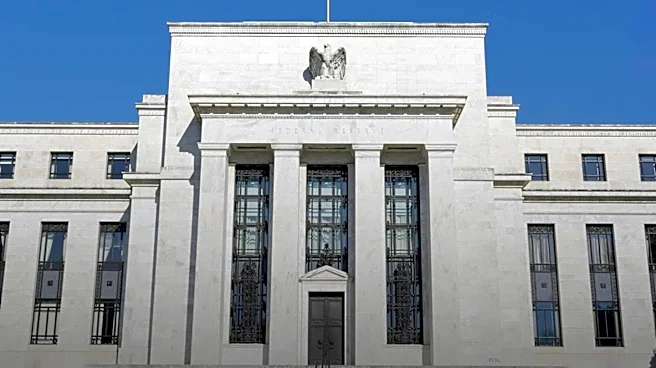
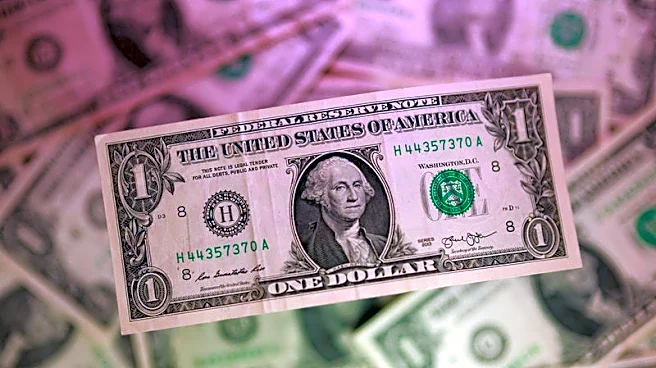
Goldman Sachs strategist Kamakshya Trivedi predicts the U.S. dollar will continue to strengthen in the near term before experiencing a modest weakening in 2027. This forecast, shared on November 23, is primarily driven by expectations regarding the Federal
Reserve's interest rate policy. The broad dollar index reached 123.60 on November 20, marking its highest level since April 2025. Concurrently, the 2-year Treasury yield stood at 4.63% on November 20, 108 basis points higher than a year prior and 63 basis points above the Fed's target range ceiling of 3.75% to 4%. This elevated yield suggests market anticipation of further Fed tightening. Despite the dollar's strength, the Fed's balance sheet has expanded, with total assets at $6.741 trillion as of November 18, an increase of $186 billion from the previous year, and bank reserve balances rising by $91 billion to $2.980 trillion. This indicates that the dollar's gains are not due to scarce liquidity but rather the price of money.
Why It's Important?
The projected continued strength of the dollar has significant implications for U.S. investors and multinational corporations. A stronger dollar typically weighs on unhedged foreign holdings and reduces the value of multinational earnings when translated back into dollars. Conversely, if market expectations for further Fed rate increases diminish, the dollar's anticipated weakening in 2027 could become the baseline scenario, potentially benefiting U.S. companies with international operations. The Federal Reserve's monetary policy, particularly its interest rate decisions, is identified as the primary driver of these currency movements. Federal Reserve Governor Lisa Cook has expressed concerns that current financial conditions are 'too accommodative,' suggesting a need for further interest rate increases to combat inflation, which could support a stronger dollar. The divergence between the expanding Fed balance sheet and the strengthening dollar highlights that the 'price of money' (interest rates) is currently a more dominant factor than the 'quantity of money' (liquidity) in influencing the dollar's value.
What's Next?
The next significant event for monitoring the dollar's trajectory and the Federal Reserve's policy stance is the December 8-9 FOMC meeting. This meeting will include new projections for the policy rate through 2027, offering further clarity on the Fed's anticipated rate path. Market participants will closely watch these projections, as they will influence future dollar valuations and investment strategies. Goldman Sachs's forecast for a modest weakening of the dollar in 2027 is contingent on several factors: inflation falling back towards 2%, the market not fully delivering the approximately 70 basis points of rate increases currently priced into futures, and capital subsequently flowing out of dollar assets. However, counter-signals, such as Governor Cook's warning about accommodative financial conditions, suggest that the path to a weaker dollar is not guaranteed and could be influenced by ongoing inflation concerns and potential Fed actions.
Beyond the Headlines
The interplay between the Federal Reserve's interest rate policy, inflation, and the U.S. dollar's strength reveals a complex economic dynamic. While a strong dollar can be a sign of economic confidence, it also presents challenges for U.S. exporters and companies with significant international revenue, as their goods become more expensive abroad and foreign earnings are devalued. The Fed's balancing act between controlling inflation through rate hikes and managing the broader economic impact, including currency fluctuations, is critical. The fact that the dollar is strengthening despite an expanding Fed balance sheet suggests a shift in how market participants perceive monetary policy effectiveness, emphasizing interest rates over quantitative measures. This could indicate a long-term trend where the 'price' of money, rather than its 'quantity,' becomes the dominant factor in financial market dynamics, potentially leading to more volatile currency movements in response to interest rate expectations.