
What's Happening?
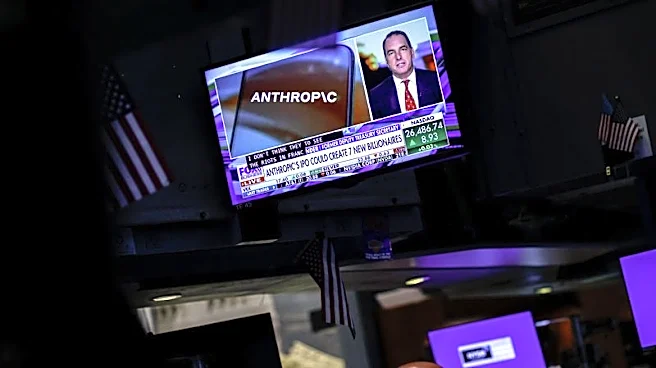
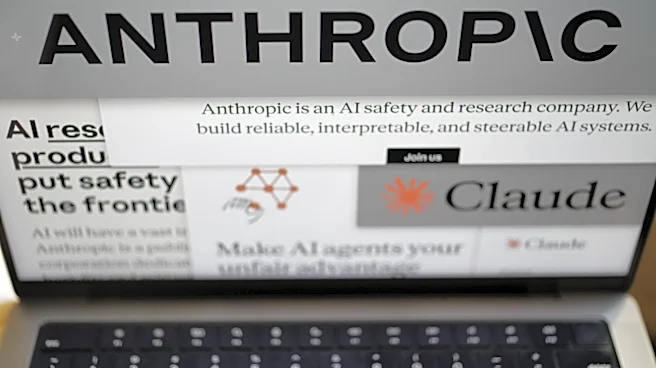
Anthropic, the developer of the Claude chatbot, has completed the largest stock-market debut on record, raising $81.3 billion in its initial public offering (IPO). The company priced its shares at $83
apiece, exceeding its initial range of $70 to $78, signaling strong investor demand. This IPO values Anthropic at approximately $1.5 trillion on a fully diluted basis, including stock options and restricted stock. The total deal size reached $107.3 billion, incorporating an additional $26 billion raised through a private placement of shares at the IPO price. Anthropic's debut comes amidst a challenging environment for AI stocks, with recent pressures on chipmakers and cloud companies due to valuation concerns and rising infrastructure costs. Despite these broader market anxieties and intensifying competition, Anthropic's offering has defied expectations, becoming the first major frontier AI model developer to go public. Goldman Sachs and Morgan Stanley served as lead underwriters for the offering, which involved a 22-bank syndicate.
Why It's Important?
Anthropic's record-breaking IPO is a pivotal moment for the artificial intelligence industry and the broader U.S. stock market. Its $1.5 trillion valuation positions it as one of the most valuable companies globally, demonstrating immense investor confidence in the long-term potential of frontier AI models despite current market volatility. This successful debut could reignite investor enthusiasm for AI companies and encourage other major players, such as OpenAI, to pursue public listings. The substantial capital raised will enable Anthropic to further invest in research and development, scale its computing infrastructure, and expand its market reach, intensifying competition in the AI sector. For the U.S. economy, this IPO signifies a massive creation of wealth, with thousands of employees potentially becoming multimillionaires, which could stimulate spending and investment, particularly in the San Francisco real estate market and philanthropy. The IPO also serves as a critical test of whether the economics of AI can sustain such high valuations, providing valuable insights for future tech IPOs.
What's Next?
Anthropic is set to begin trading on the Nasdaq under the ticker ANT, with its performance on the public market closely watched as a bellwether for the AI industry. The company will face increased scrutiny regarding its financial performance, particularly its ability to sustain rapid revenue growth while managing escalating computing and infrastructure costs. Analysts and investors will be keen to see if Anthropic can maintain its competitive edge against rivals like OpenAI and Meta Platforms, which is developing more AI capabilities internally. The company's commitment to nearly $900 billion in computing spending with partners like Amazon and Google will be a key factor in its operational efficiency and profitability. Furthermore, Anthropic will need to navigate the delicate balance between its commercial ambitions and its stated emphasis on AI safety, as CEO Dario Amodei has advocated for a slower pace in developing powerful AI models. The success of this IPO could pave the way for other AI companies to enter public markets, potentially leading to a new wave of tech listings.
Beyond the Headlines
Anthropic's IPO highlights several deeper implications for the technology sector and society. The sheer scale of its valuation underscores the transformative potential investors see in artificial intelligence, positioning AI as a central pillar of future economic growth. However, the significant spending commitments on computing infrastructure also reveal the immense capital intensity required to operate at the frontier of AI development, raising questions about long-term profitability and market concentration. The company's emphasis on AI safety, while pursuing aggressive commercial growth, presents an ethical tightrope walk that could influence industry standards and regulatory frameworks. This IPO also brings to the forefront the debate about the true economic value of AI, as companies grapple with the costs of development versus the revenue generated. The creation of substantial wealth for employees could also lead to broader societal impacts, including increased philanthropic activity and shifts in regional economic dynamics, particularly in the tech hubs of the U.S. The success or struggles of Anthropic in the public market will undoubtedly shape the narrative around AI's commercial viability and its responsible development for years to come.