







What's Happening?
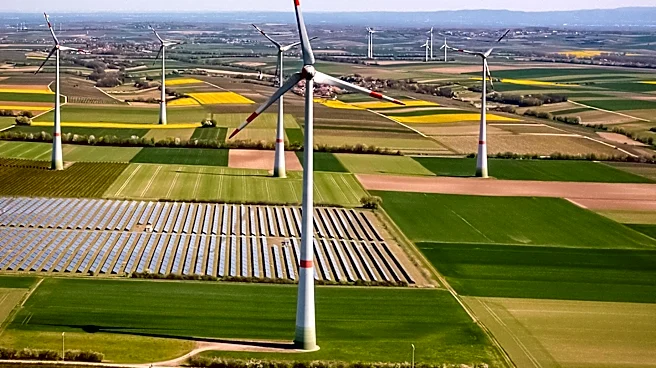
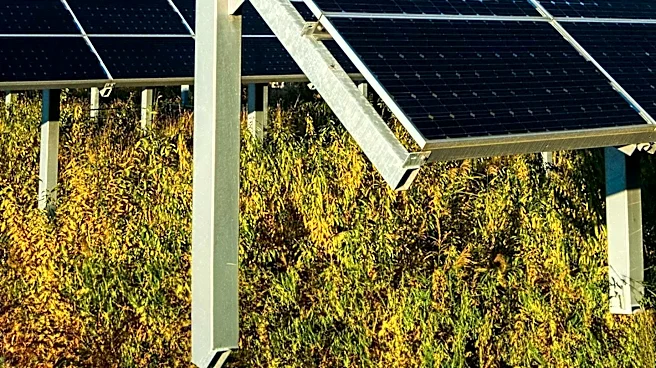
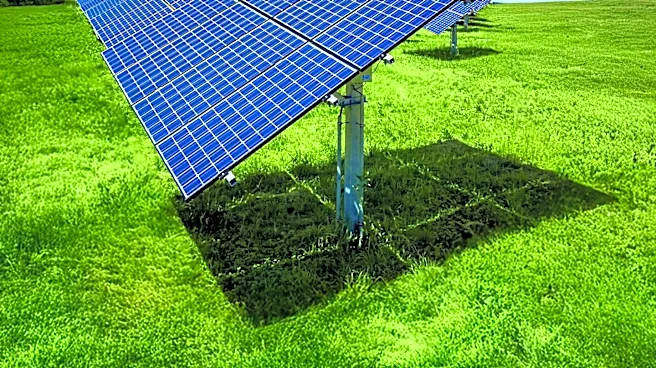
Agrivoltaics, the integration of solar panels with agricultural activities, is gaining traction as a dual solution to land-use challenges. By placing solar panels on farmland, agrivoltaics aims to harmonize the production of food and electricity. This
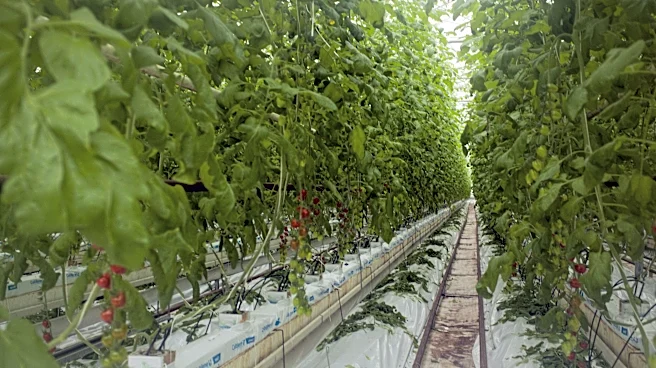
approach is particularly appealing as it addresses the conflict between agricultural and energy needs. The panels provide shade, crop protection, and water resilience, enhancing farm productivity while generating power. The effectiveness of agrivoltaics depends on the solar structures performing essential farm functions, such as providing shade to relieve agricultural constraints or supporting livestock. Different configurations, like grazing sheep under solar arrays or using photovoltaic structures over vineyards, offer varied benefits and challenges. The success of agrivoltaics projects hinges on their ability to provide tangible agricultural benefits alongside energy production.
Why It's Important?
The significance of agrivoltaics lies in its potential to optimize land use by combining agriculture and renewable energy production. This approach can lead to increased farm revenue, reduced reliance on fossil fuels, and enhanced sustainability. By providing shade and protection, solar panels can mitigate climate-related stresses on crops, potentially improving yields and quality. The integration of solar energy into farming operations can also reduce operational costs and increase energy independence for farmers. However, the economic viability of agrivoltaics depends on the specific agricultural and climatic conditions, as well as the cost-effectiveness of the solar structures. Successful implementation could lead to widespread adoption, transforming the agricultural landscape and contributing to renewable energy goals.
What's Next?
The future of agrivoltaics will likely involve further research and development to optimize configurations for different crops and climates. Stakeholders, including farmers, energy companies, and policymakers, will need to collaborate to create supportive frameworks and incentives for agrivoltaics projects. As the technology matures, it will be crucial to gather data on crop yields, energy production, and economic outcomes to refine best practices. The expansion of agrivoltaics could also prompt regulatory changes to accommodate dual land-use systems. Continued innovation and investment in this field could lead to more efficient and cost-effective solutions, encouraging broader adoption across diverse agricultural settings.
Beyond the Headlines
Agrivoltaics presents an opportunity to rethink traditional agricultural practices and energy production. By integrating these systems, there is potential for significant environmental benefits, such as reduced carbon emissions and improved land conservation. The approach also raises questions about land ownership, access to technology, and the distribution of benefits among stakeholders. Ethical considerations include ensuring that agrivoltaics projects do not disproportionately impact small-scale farmers or lead to land-use conflicts. As the technology evolves, it will be important to address these issues to ensure equitable and sustainable development.