






What's Happening?
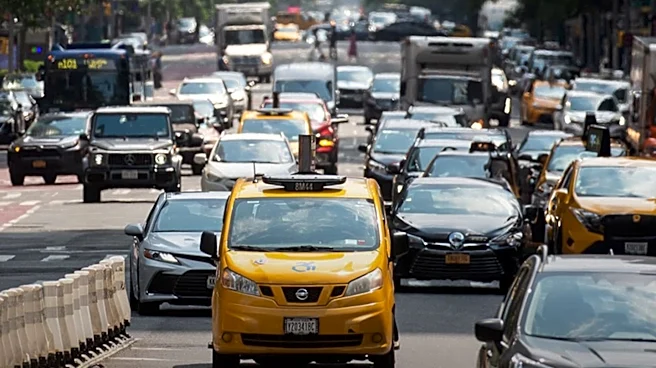
Taxi fares worldwide reveal significant economic inequalities within cities, influenced by factors such as economic structure, wage levels, regulations, and competition. Zurich, Switzerland, has the highest average fare at $23.50 for a 5-kilometer ride,
followed closely by Geneva at $23.30. In stark contrast, Karachi, Pakistan, and Cairo, Egypt, report average fares of $0.50 and $0.80, respectively. Jakarta, Indonesia, is noted for its relatively low fares, projected to be around $1.80 in 2025, but this is still considered expensive for local residents given their purchasing power. High-income countries like those in the Nordic region (Oslo, Copenhagen, Stockholm, Helsinki, Reykjavik) also show high fares, reflecting high labor and operational costs. The depreciation of the rupiah against the US dollar further exacerbates affordability issues in Indonesia, increasing operational costs for taxi companies.
Why It's Important?
The disparity in taxi fares globally is a critical indicator of urban economic inequality and the varying cost of living across different regions. In high-income countries, high fares reflect robust economies with high wages and operational costs, making taxi services a premium option. Conversely, in developing nations, low fares, while seemingly affordable to foreign visitors, often mask a deeper issue of weak local purchasing power, rendering even these low fares a luxury for many residents. This situation highlights a fundamental challenge in urban mobility: access to comfortable and efficient transportation often correlates with income levels, potentially widening the economic gap. The struggle of conventional taxi operators against ride-hailing services, particularly in countries like Indonesia, further complicates the landscape, as regulatory inconsistencies and differing operational burdens create an uneven playing field, impacting both service quality and affordability for the general public.
What's Next?
The ongoing competition between conventional taxis and ride-hailing services will likely continue to evolve, with potential calls for more consistent regulatory enforcement to ensure fair competition. In countries facing currency depreciation, such as Indonesia, taxi companies may face increasing pressure to adjust fares to cover rising operational costs, which could further strain the affordability for local populations. Policymakers might need to consider subsidies or other interventions to ensure equitable access to transportation, especially for lower-income groups. Additionally, the focus on public transportation development will remain crucial in many cities to provide more affordable and accessible mobility options, thereby reducing reliance on private and semi-private services that may become increasingly unaffordable for a significant portion of the population.
Beyond the Headlines
The issue of taxi fares extends beyond mere economics; it touches upon social equity and the quality of urban life. When comfortable transportation becomes a luxury, it can limit opportunities for employment, education, and healthcare for those with lower incomes, perpetuating cycles of poverty. This mobility inequality can lead to increased social stratification within cities, where certain areas become inaccessible or impractical for segments of the population. The environmental impact of transportation choices is also a factor; if affordable public transport is lacking, individuals may resort to less sustainable options or face longer commutes, contributing to pollution and congestion. Ultimately, the affordability and accessibility of urban transportation are fundamental to creating inclusive and sustainable cities, reflecting broader societal values regarding equity and opportunity.