



What's Happening?
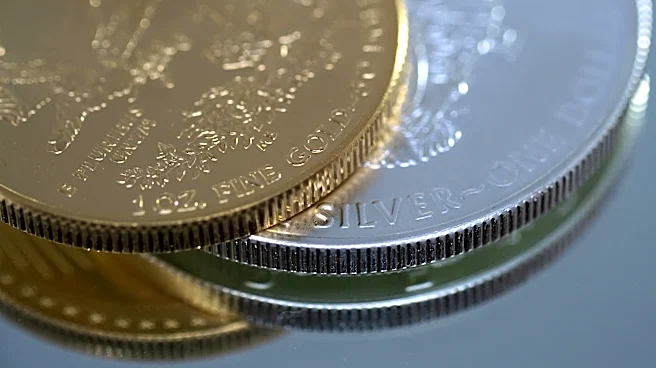
Gold prices have demonstrated considerable volatility over the past 46 years, with data revealing that on 50% of all trading days between January 1980 and October 2026, gold traded more than 10% below its previous peak. This finding, detailed in FundsIndia's
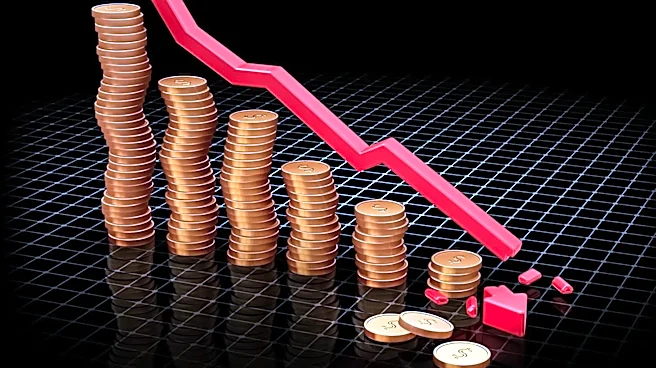
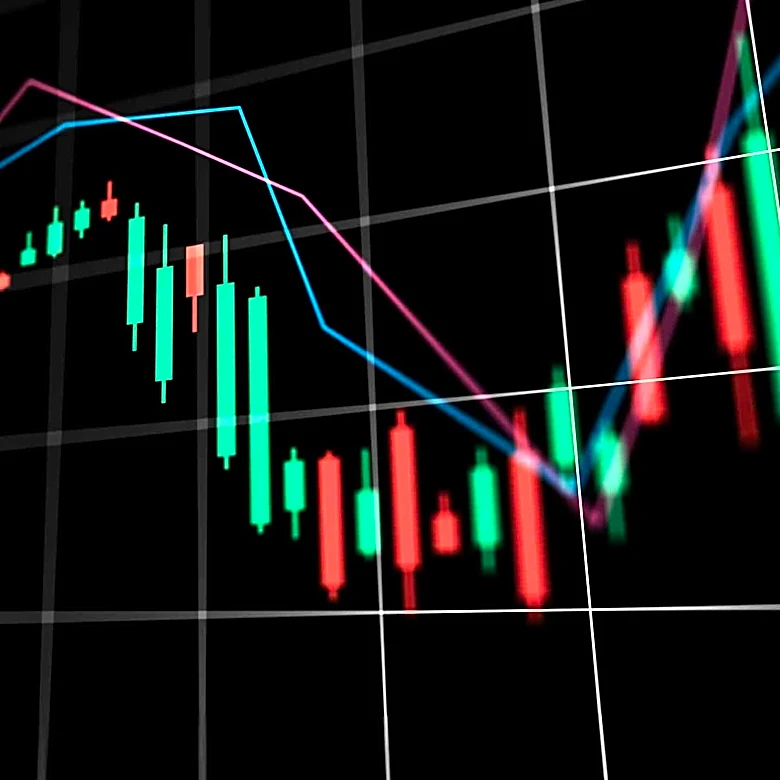
November 2026 Wealth Conversations report, challenges the common perception of gold as a consistently safe and stable investment. As of November 16, 2026, 24-carat gold in India was priced at approximately Rs 1,35,430 per 10 grams, marking a decline of roughly 24% from its January 30 peak of Rs 1,79,140. The report also indicates that gold spent 71% of trading days more than 5% below its peak and a quarter of all trading days more than 20% below its peak.
Why It's Important?
This historical analysis is crucial for U.S. investors and financial advisors, as it highlights the often-overlooked volatility inherent in gold investments. While gold is frequently touted as a safe haven, particularly during economic uncertainty, the data suggests that investors can face prolonged periods of price declines and lengthy recovery times. For instance, gold took nearly 10 years to recover its January 1980 peak after a 57% fall and approximately six to seven years to recover from significant drops in 1996 and 2012. This extended recovery period can significantly impact investment returns and liquidity for those who invest at or near market peaks, challenging the notion of gold as a short-term or medium-term safe investment.
What's Next?
The report emphasizes that while gold can serve as a portfolio diversifier due to its non-correlation with equities, investors should not view it as an asset immune to sharp declines. Future investment strategies should account for gold's historical volatility and the potential for long recovery periods. Investors are advised to consider the timing of their investments, their holding period, and their need for liquidity. The data suggests that buying gold after a strong rally carries inherent risks, and a thorough understanding of its historical price movements is essential for making informed investment decisions. The ongoing influence of global economic factors and monetary policies will continue to shape gold's price trajectory.
Beyond the Headlines
The findings from FundsIndia's report prompt a deeper re-evaluation of gold's role in modern investment portfolios. While gold has delivered strong long-term annualized returns (around 10% across historical 10-year rolling periods since 1980), the significant time spent below peak prices reveals a 'hidden volatility' that can be detrimental to investors with shorter time horizons or those who need to access their capital during downturns. This analysis encourages a more nuanced understanding of risk in what is often considered a 'safe' asset. It also underscores the importance of diversification and realistic expectations, moving beyond simplistic narratives of gold as an ultimate hedge and instead viewing it as a component within a broader, well-managed investment strategy that acknowledges its cyclical nature and potential for extended periods of underperformance relative to its previous highs.