







What's Happening?
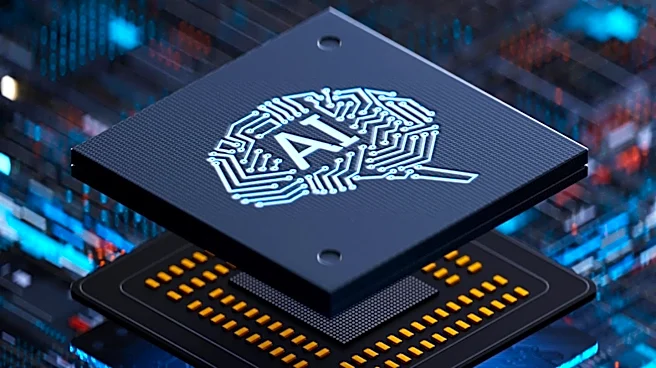
Major technology companies, including Google, Amazon, and Meta, are accelerating the development of their own Artificial Intelligence (AI) chips. This strategic shift aims to decrease their dependence on external suppliers like Nvidia and improve cost-efficiency.
Google is continuously upgrading its Tensor Processing Unit (TPU), with the next-generation TPU 8i expected to increase High Bandwidth Memory (HBM) capacity by 50% to 288GB. Amazon's Trainium3 also shows a 50% increase in HBM capacity to 144GB compared to its predecessor, Trainium2, with Trainium4 already in development for a 2027 release. Meta is similarly advancing its own AI accelerator, MTIA. This move is driven by the evolving AI industry, where the focus is expanding from AI model training to inference, which involves providing actual AI services. Key considerations for these companies include power efficiency, response latency, and return on investment for their AI services. By utilizing Application-Specific Integrated Circuits (ASICs) optimized for their specific AI needs, these companies can reduce unnecessary computations and enhance power efficiency. The underlying intention is also to diversify the semiconductor supply chain, thereby lowering reliance on Nvidia.
Why It's Important?
This trend signifies a significant shift in the AI semiconductor market, potentially disrupting Nvidia's dominant position. For big tech companies, developing in-house AI chips offers substantial long-term benefits, including reduced operational costs and greater control over their AI infrastructure. While initial development costs can be high, mass production of customized chips is expected to significantly lower the unit price compared to general-purpose GPUs. This vertical integration allows these companies to tailor hardware precisely to their software, optimizing performance and efficiency for their unique AI workloads. The increased demand for customized technological capabilities means that semiconductor manufacturers like Samsung and SK Hynix, which produce HBM, may find new opportunities to collaborate with big tech on specialized solutions. However, this also presents challenges, as the diverse specifications for AI chips across different companies could increase the burden of development costs and technical responses for HBM suppliers. The move also reflects a broader strategy to secure supply chains and mitigate risks associated with relying on a single vendor for critical components.
What's Next?
The continued development and deployment of proprietary AI chips by big tech companies will likely intensify competition in the AI hardware market. This could lead to further innovation in chip design and manufacturing, as companies strive for greater efficiency and performance. Semiconductor manufacturers will need to adapt to the growing demand for highly customized HBM and other components, potentially leading to more specialized production lines and closer partnerships with individual tech giants. The diversification of the semiconductor supply chain could also reduce market volatility and enhance resilience against potential disruptions. Furthermore, this trend may influence the broader AI ecosystem, as companies with proprietary hardware could gain a competitive edge in delivering AI services. The success of these in-house chip initiatives will be closely watched, as it could set a precedent for other industries to pursue similar vertical integration strategies for critical technologies.
Beyond the Headlines
The shift towards in-house AI chip development by big tech companies has deeper implications for technological sovereignty and market dynamics. It represents a move away from a generalized hardware approach to a more specialized, integrated one, where software and hardware are co-designed for optimal performance. This could lead to a more fragmented AI hardware landscape, with each major tech player operating within its own optimized ecosystem. The increased control over hardware development also grants these companies greater strategic autonomy, reducing external dependencies and potentially influencing future AI research and development trajectories. Moreover, this trend highlights the immense capital and technical expertise required to compete at the forefront of AI, further solidifying the market power of existing tech giants. It also raises questions about interoperability and standardization within the AI industry, as proprietary hardware ecosystems become more prevalent. The environmental impact of these specialized data centers and chip manufacturing processes will also be a growing concern, as the demand for AI processing power continues to escalate.