







What's Happening?
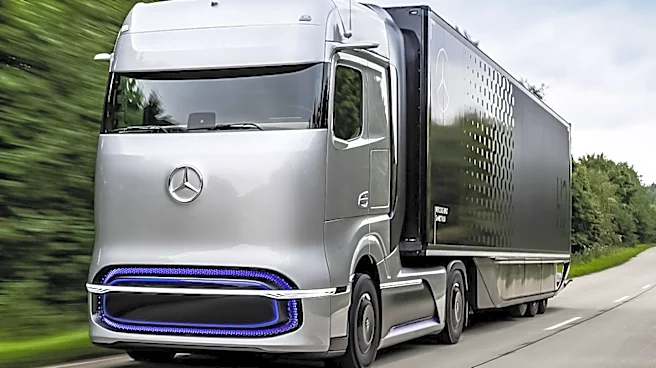
Artificial intelligence (AI) is increasingly being used in heavy-duty truck fleet management, particularly in route optimization and maintenance scheduling, with adoption rates reaching 71% and 64.5% respectively. However, a significant gap remains in the
use of AI for lifecycle management decisions, such as when to acquire or replace trucks. A recent survey indicates that 64.5% of organizations do not use AI for the lease-end process, and the adoption rate for acquisition planning and end-of-life cycling is near zero. These decisions are often made using traditional methods like spreadsheets and gut instinct, despite the availability of analytics programs that could save organizations millions. The challenge lies in integrating data from various systems to make informed decisions, as current practices often lead to increased costs due to maintenance, fuel inefficiency, and reduced resale value.
Why It's Important?
The lack of AI integration in lifecycle management decisions for truck fleets has significant financial implications. Poor lifecycle management can lead to increased maintenance costs, decreased fuel efficiency, and lower resale values, which collectively erode the total value of ownership over time. Organizations that fail to adopt AI in these areas risk making costly decisions based on incomplete information. By integrating AI, companies can optimize their fleet management, leading to substantial cost savings and improved operational efficiency. This shift is crucial for maintaining competitiveness in the transportation industry, where margins are often tight, and operational efficiency is key to profitability.
What's Next?
Organizations are expected to increasingly adopt AI for lifecycle management as they recognize the potential cost savings and efficiency gains. This will likely involve integrating data from telematics, maintenance records, and fuel consumption logs to provide a comprehensive view of fleet performance. As AI tools become more sophisticated, they will offer more precise insights into optimal acquisition and replacement timing, helping companies make better-informed decisions. The transition will require investment in AI infrastructure and training for staff to effectively interpret and act on AI-generated insights.