



What's Happening?
Melio Store has opened a new location in Leiria, Portugal, specifically in Gândara dos Olivais. This new store aims to provide a wide variety of products at low prices, with items starting from 1€. The inventory includes household goods, clothing, accessories,
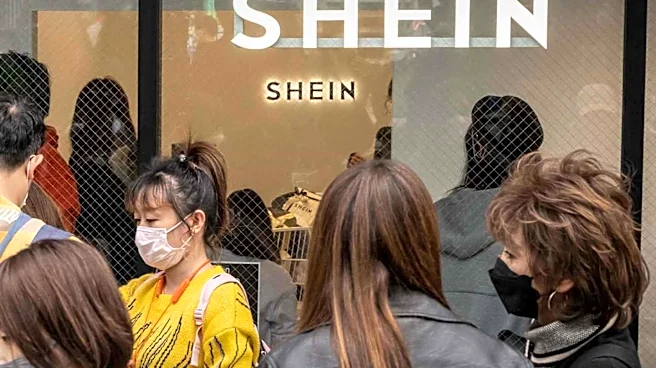
and food items, particularly Asian flavors like ramen. A notable feature of the new store is the availability of Shein apparel, with prices beginning at 3.99€. This allows customers to purchase Shein products in a physical retail setting, a brand typically associated with online shopping. The Leiria store is the second Melio Store in Portugal, following an existing location in Guimarães. The store's concept focuses on combining various daily necessities and unique items in a single shopping space, encouraging customers to explore different categories beyond their initial shopping intentions. The new establishment is situated on Estrada da Figueira da Foz, near other major retailers such as Pingo Doce, Continente, and Aldi.
Why It's Important?
The expansion of Melio Store in Portugal, particularly with its focus on discounted Shein apparel and a diverse product range, signifies a growing trend in retail towards accessible pricing and varied consumer offerings. For the U.S. market, this development could indicate potential future retail strategies for online-first brands like Shein, exploring physical storefronts to reach a broader customer base or offer a different shopping experience. The emphasis on low-cost items and a wide selection, from household goods to international food products, reflects a consumer demand for value and convenience. If successful, this model could influence U.S. retailers to diversify their product lines and consider integrating online-exclusive brands into brick-and-mortar locations. This approach could also impact supply chain logistics and inventory management for brands looking to bridge the gap between e-commerce and traditional retail, potentially leading to new distribution and partnership models in the U.S. retail landscape.
What's Next?
The Melio Store's success in Leiria, Portugal, will likely be closely monitored as a case study for the viability of combining online-centric brands like Shein with a broad discount retail model in physical spaces. Future developments could include further expansion of Melio Stores within Portugal or into other European markets, potentially influencing similar retail strategies in the U.S. The integration of Shein products into a physical store could lead to more collaborations between online fashion retailers and brick-and-mortar establishments, offering new avenues for customer engagement and sales. Retailers in the U.S. might observe how this model impacts consumer behavior, particularly regarding the purchase of typically online-exclusive brands in person. Additionally, the store's diverse product offering, including Asian food items and mystery boxes, could inspire U.S. retailers to experiment with unique product assortments to attract a wider demographic and enhance the in-store shopping experience.
Beyond the Headlines
The Melio Store's strategy of offering Shein products in a physical store touches upon deeper implications for the retail industry, particularly the evolving relationship between e-commerce and traditional brick-and-mortar. This move challenges the conventional separation of online and offline retail, suggesting a future where brands seamlessly integrate both channels to meet consumer demands. For Shein, a brand often associated with fast fashion and online-only sales, a physical presence could address concerns regarding product quality and sizing, allowing customers to inspect items before purchase. This could also impact the brand's image and customer loyalty. Furthermore, the store's diverse inventory, ranging from household items to international foods, reflects a broader cultural shift towards globalized consumption and the desire for convenience in a single shopping destination. This model could lead to a re-evaluation of retail space utilization, with stores becoming more experiential and offering a curated mix of products to cater to varied consumer interests, moving beyond traditional category-specific retail formats.