






What's Happening?
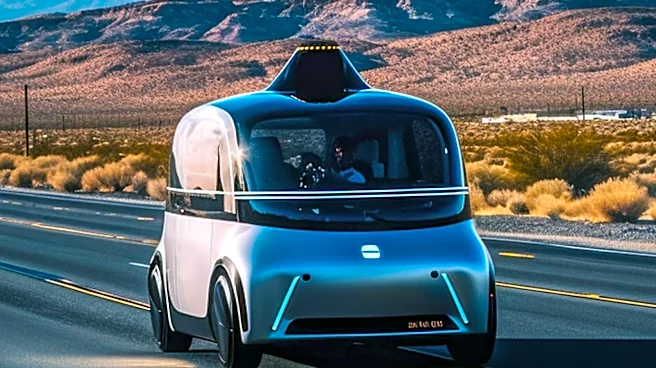
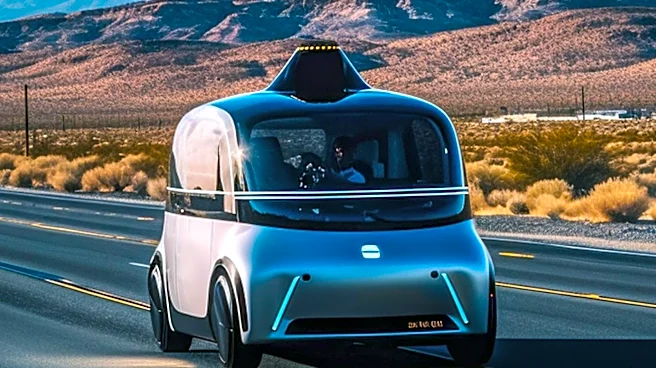
Amazon's self-driving robotaxi service, Zoox, has expanded its operations to include cities such as Las Vegas and San Francisco. These vehicles are notable for being among the first commercially approved self-driving vehicles that operate without a steering
wheel or dashboard. This expansion marks a significant step in the deployment of autonomous vehicle technology for public use. NBC News' Chief Tech correspondent Joanna Stern discussed the new cars and their implications with Tom Llamas, highlighting the technological advancements and regulatory approvals that have enabled this development. The service aims to provide a new form of urban transportation, leveraging advanced AI and sensor technology to navigate city streets autonomously.
Why It's Important?
The expansion of Amazon's Zoox robotaxi service into major U.S. cities like Las Vegas and San Francisco is a pivotal moment for the autonomous vehicle industry and urban transportation. This move signifies a growing confidence in the safety and reliability of self-driving technology, potentially paving the way for wider adoption across the nation. For consumers, it introduces a new transportation option that could offer convenience and efficiency, while for the broader economy, it represents a significant investment in future mobility solutions. The absence of a steering wheel or dashboard in these vehicles underscores a fundamental shift in vehicle design and operation, challenging traditional notions of driving and car ownership. This development could also spur further innovation and competition within the autonomous vehicle sector, influencing regulatory frameworks and infrastructure development in urban areas.
What's Next?
The expansion of Zoox into Las Vegas and San Francisco is likely to be followed by a period of observation and data collection to assess the service's performance, safety, and public acceptance. Regulatory bodies will closely monitor these operations, potentially influencing future approvals and guidelines for autonomous vehicles in other cities. Amazon will likely continue to refine its technology, addressing any operational challenges and enhancing the user experience. Other companies in the autonomous vehicle space will be watching closely, potentially accelerating their own deployment plans or adjusting their strategies based on Zoox's progress. The success of these initial deployments could lead to further geographical expansion and an increase in the scale of the service, gradually integrating robotaxis into the fabric of urban transportation systems across the U.S.
Beyond the Headlines
The deployment of Zoox robotaxis without traditional controls like a steering wheel or dashboard raises profound questions about the future of human-machine interaction and the very definition of driving. This technological leap challenges established legal and ethical frameworks concerning liability in autonomous vehicle accidents, as the concept of a 'driver' becomes increasingly abstract. Culturally, it could reshape urban landscapes by reducing the need for personal car ownership and potentially altering traffic patterns and parking demands. The widespread adoption of such services might also have significant environmental implications, depending on the energy sources used for these vehicles. Furthermore, the data collected by these autonomous systems could offer unprecedented insights into urban mobility, but also raise concerns about privacy and data security, necessitating robust regulatory oversight and public discourse on these complex issues.