







What's Happening?
John Sherman, born in the United States in 1959, is widely recognized for his significant contributions to the sport of bouldering. Holding a geologist degree from the University of Colorado, Sherman is primarily known for developing Hueco Tanks, popularizing
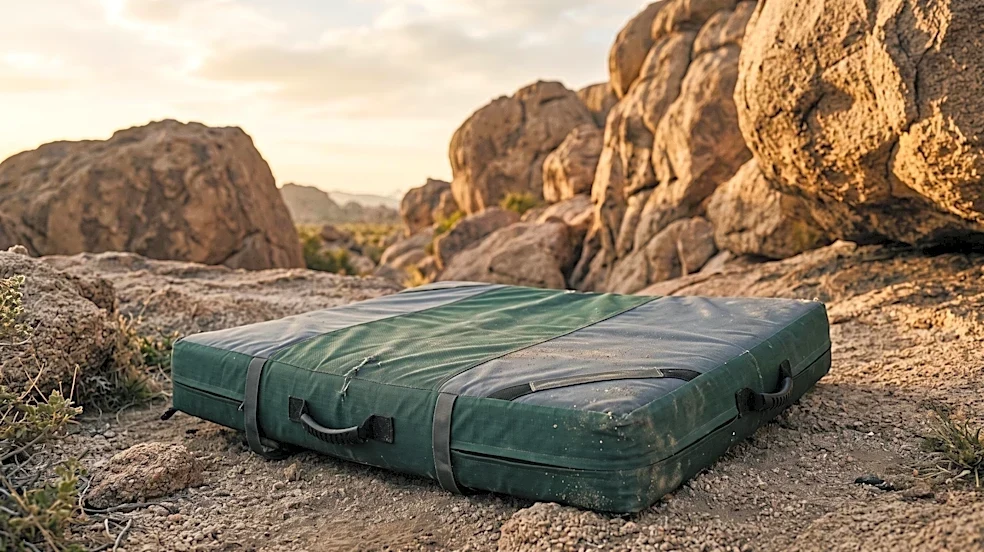
bouldering, and establishing the V-scale. During the 1980s and early 1990s, he achieved over 400 first ascents at Hueco Tanks. In 1991, Sherman introduced the V-scale to a broader audience through his 'Hueco Tanks Climbing and Bouldering Guide,' which provided a standardized system for grading boulder problems. This scale allowed climbers to compare difficulties and find routes suited to their skill levels, addressing the limitations of previous grading systems like the B and E-scales. Additionally, in 1992, Sherman co-designed the Kinnaloa Sketchpad with Bruce Pottenger, an early commercially available bouldering crash pad, enhancing safety for boulderers.
Why It's Important?
Sherman's establishment of the V-scale revolutionized bouldering by providing a consistent and widely adopted grading system. Before the V-scale, grading systems were often subjective and inconsistent, making it difficult for climbers to assess the difficulty of problems and hindering the sport's growth and standardization. The V-scale's introduction facilitated better communication among climbers, improved the documentation of bouldering routes, and made the sport more accessible to a wider audience. His extensive development of routes at Hueco Tanks transformed the area into a premier bouldering destination, attracting climbers globally and fostering a vibrant bouldering community. The co-design of the Kinnaloa Sketchpad also significantly improved safety standards in bouldering, allowing climbers to attempt more challenging problems with reduced risk of injury. These contributions collectively elevated bouldering from a niche activity to a more recognized and structured sport within the climbing community.
What's Next?
The legacy of John Sherman's contributions continues to shape the bouldering world. The V-scale remains one of the two most widely used grading systems globally, indicating its enduring influence and utility. Future developments in bouldering will likely build upon the foundations he established, with ongoing efforts to refine grading systems and enhance safety equipment. The popularity of bouldering, partly fueled by Sherman's pioneering work, is expected to continue growing, potentially leading to more dedicated bouldering gyms, outdoor areas, and competitive events. As the sport evolves, the principles of route development and safety that Sherman championed will likely guide new generations of climbers and developers, ensuring the sport's continued progression and accessibility.
Beyond the Headlines
Beyond the practical aspects of grading and safety, John Sherman's work embodies a deeper cultural shift in outdoor sports. His 'crazy and stubborn' approach, as described by some, reflects a spirit of independent exploration and a willingness to challenge existing norms. This ethos has resonated with the bouldering community, fostering a culture that values personal challenge, problem-solving, and a unique connection with nature. The development of Hueco Tanks as a bouldering mecca also highlights the delicate balance between recreational use and environmental preservation, as evidenced by the subsequent restrictions implemented by local authorities to safeguard the area's history and nature. Sherman's narrative, including his notable books like 'Stone Crusade,' 'Sherman Exposed,' and 'Better Bouldering,' contributes to the rich storytelling tradition within climbing, inspiring future generations to push boundaries and explore the sport's physical and philosophical dimensions.