


What's Happening?
Reggaeton, a music genre with roots in Latin and Caribbean music, has seen a significant rise in global popularity. This ascent is attributed to factors such as streaming platforms, strategic collaborations between artists, and cultural exchange. The
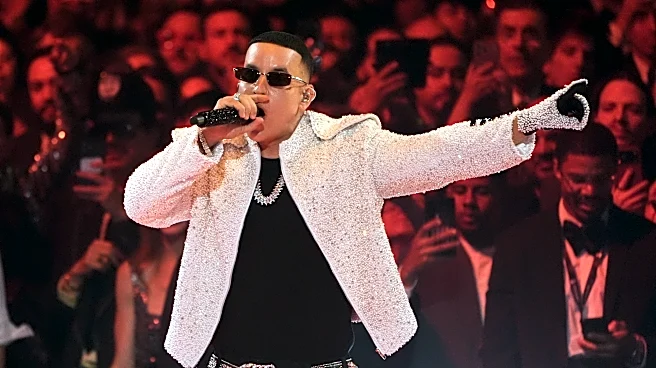
genre's growth is exemplified by the success of songs like 'Despacito' in 2017, which became the first Spanish-language song in 21 years to top the Billboard Hot 100. Artists such as Bad Bunny and Karol G are now selling out stadiums worldwide, even in regions where Spanish is not widely spoken. While its foundations were laid in the Caribbean, particularly Panama and Puerto Rico, cities like Medellín, Colombia, have become central hubs for shaping its sound for broader audiences. Pioneers like El General and El Chombo in Panama, and Ivy Queen and Daddy Yankee in Puerto Rico, established the genre's early presence. Streaming platforms have played a crucial role by allowing Spanish-speaking artists to build international fanbases directly, bypassing traditional industry gatekeepers.
Why It's Important?
The global rise of reggaeton signifies a major shift in the international music landscape, demonstrating the power of digital platforms and cross-cultural artistic partnerships. For the U.S. music industry, this trend highlights the increasing influence of Latin music and the potential for non-English language songs to achieve mainstream success. It impacts record labels, streaming services, and concert promoters, encouraging them to invest more in Latin artists and expand their marketing strategies to diverse audiences. The genre's ability to blend with other styles, such as dancehall and merengue, also fosters innovation and opens new avenues for musical experimentation. This cultural phenomenon challenges traditional notions of music consumption and global appeal, proving that authentic artistic expression, regardless of language, can resonate widely. The success of reggaeton artists also creates significant economic opportunities, from music sales and streaming revenue to large-scale concert tours and merchandise.
What's Next?
The future of reggaeton appears to involve continued genre blending and collaboration. Artists are increasingly fusing reggaeton beats with other styles, leading to hybrid sounds like merenguetón and dancehall-infused tracks. This openness to experimentation suggests that the genre will become less purist and more diverse. Cultural journalists predict that as reggaeton rhythms spread across other genres, the original form might become more niche, while its influence permeates a wider array of musical styles. The new generation of artists is expected to continue this trend of experimentation and genre blending. Events like the Reggaeton Rave in Jacksonville, Florida, and 'Reggaeton Fridays' in NYC, along with 'Reggaeton Forever Old School' events in Tulsa, Oklahoma, indicate a sustained and growing demand for reggaeton experiences across the U.S., suggesting continued expansion of its cultural footprint.
Beyond the Headlines
The success of reggaeton extends beyond mere musical popularity; it represents a powerful cultural movement that has overcome historical barriers and prejudices. Initially persecuted in its early stages due to classism and moral panic, the genre has evolved into a global phenomenon, fostering a sense of pride and connection for Latinx communities worldwide. Its ability to transcend language barriers, as noted by artists who observe that listeners connect with the emotion and rhythm even without understanding the lyrics, underscores the universal appeal of music. This cultural exchange also highlights the evolving demographics and tastes within the U.S., where Latinx culture is increasingly shaping mainstream trends. The genre's emphasis on collaboration also reflects a broader shift towards interconnectedness in the creative industries, demonstrating how shared artistic goals can lead to unprecedented global reach and impact.