








What's Happening?
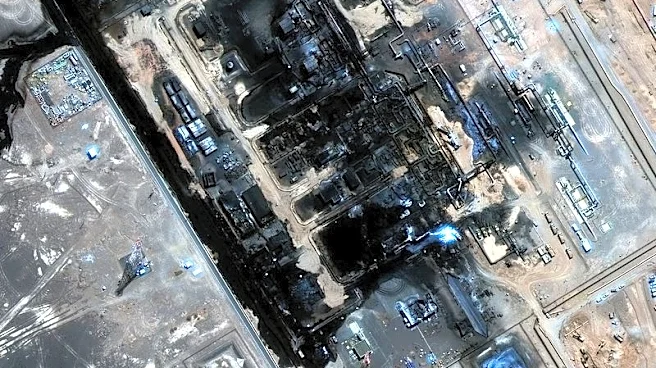
Strikes on Qatar’s North Field and Iran’s South Pars, the world’s largest gas resource, have caused significant disruptions, impacting approximately 4.5 Bcfd of Qatari gas-processing capacity. According to Wood Mackenzie, repairs to the affected Qatari facilities,
including the Pearl gas-to-liquids (GTL) complex and the Barzan gas plant, could take between four and 12 months and cost an estimated $5.8 billion. These outages have affected two LNG trains, totaling 12.7 MMtpa, which represents about 17% of Qatar's LNG export capacity. Iran has also experienced disruptions at its South Pars field, specifically at the Assaluyeh processing hub and Phase 13 facilities at Kangan, impacting about 30% of South Pars production. These disruptions occur as Qatar is simultaneously undertaking the largest LNG expansion program globally, with North Field East, North Field South, and North Field West projects expected to add 48 MMtpa of LNG capacity by 2033.
Why It's Important?
The disruptions in Qatar and Iran's gas fields pose a significant threat to global liquefied natural gas (LNG) supply, impacting energy markets and potentially influencing long-term energy security decisions. Qatar is a major global LNG exporter, and a prolonged reduction in its export capacity could lead to tighter supply, increased prices, and heightened competition among importing nations, including the U.S. and its allies. The estimated $5.8 billion repair cost and extended recovery timelines highlight the financial strain on producers and the potential for delayed project timelines. For companies like Shell, the Pearl GTL outage alone puts about 10% of its upstream cash flow at risk, demonstrating the substantial financial implications for major energy players. This situation could prompt buyers to reassess their supply security strategies and accelerate diversification efforts, potentially shifting investment towards other LNG projects or alternative energy sources.
What's Next?
The immediate focus will be on the repair and recovery efforts for the damaged facilities in Qatar and Iran. The pace of these repairs will be critical in determining the duration and severity of the LNG supply disruptions. Wood Mackenzie anticipates that the speed of infrastructure repairs could significantly influence long-term LNG contracting decisions, as buyers prioritize supply security. Qatar will continue to advance its ambitious North Field expansion projects, aiming to increase its total LNG capacity and gas production by 2033. The market will closely watch for any shifts in global LNG prices and contracting trends. Energy companies and governments worldwide will likely review their energy procurement strategies, potentially leading to new investment in LNG infrastructure or a renewed push for renewable energy sources to mitigate future supply risks.
Beyond the Headlines
Beyond the immediate impact on LNG supply and prices, these disruptions underscore the inherent vulnerabilities in global energy infrastructure, particularly in regions prone to geopolitical tensions or industrial incidents. The reliance on a few major gas fields for a significant portion of global supply creates systemic risks that can have far-reaching economic and political consequences. This situation could accelerate the global energy transition, as nations seek to reduce their dependence on volatile fossil fuel supplies by investing more heavily in renewable energy and energy efficiency. Furthermore, the incident highlights the complex interplay between energy production, geopolitical stability, and environmental concerns, as countries balance the need for reliable energy with the imperative to transition to cleaner sources. The long-term implications could include a re-evaluation of energy supply chain resilience and a greater emphasis on localized or diversified energy production models.