









What's Happening?
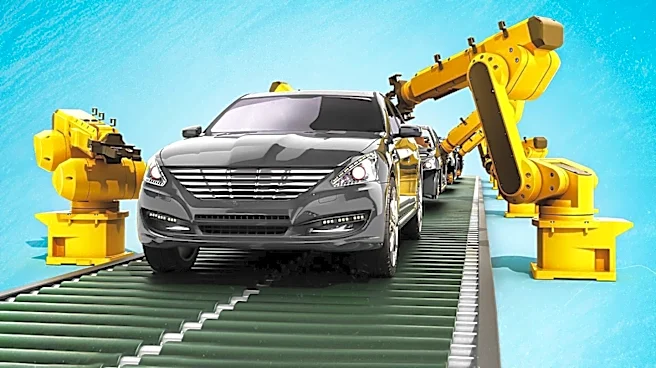
General Motors (GM) has increased the deployment of collaborative robots, known as cobots, at its Factory Zero electric vehicle plant in Michigan. This move is part of GM's strategy to modernize its manufacturing processes. The introduction of approximately
50 cobots is intended to assist employees with repetitive tasks on the assembly line, such as fitting vehicle body panels. However, this development coincides with significant workforce reductions at the facility, affecting over 1,000 employees. GM asserts that the cobots are designed to work alongside human workers to enhance safety and efficiency, rather than replace them. Despite these assurances, the United Auto Workers (UAW) has criticized the increased automation, arguing that it diminishes employment opportunities for union members. The union has filed grievances, questioning whether the technology is contributing to lower staffing levels.
Why It's Important?
The expansion of collaborative robotics at GM's Factory Zero highlights a significant trend in the automotive industry towards increased automation and advanced manufacturing technologies. While GM aims to improve productivity and worker safety through these innovations, the move has sparked concerns about job security among labor unions. The UAW's grievances underscore the tension between technological advancement and workforce stability, a critical issue as industries transition to electric vehicle production. The outcome of this debate could influence labor relations and employment practices across the sector, impacting how companies balance modernization with job preservation.
What's Next?
As GM continues its broader restructuring efforts, the company is likely to face ongoing scrutiny from labor unions and other stakeholders regarding its automation strategies. The resolution of the UAW's grievances could set precedents for how similar disputes are handled in the future. Additionally, GM's approach to managing temporary layoffs and potential rehiring will be closely watched as an indicator of its commitment to workforce stability amid technological changes. The automotive industry as a whole may need to address these challenges to ensure a harmonious transition to more automated production environments.