







What's Happening?
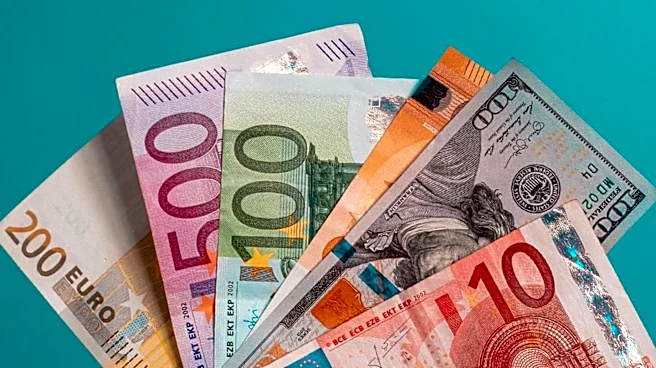
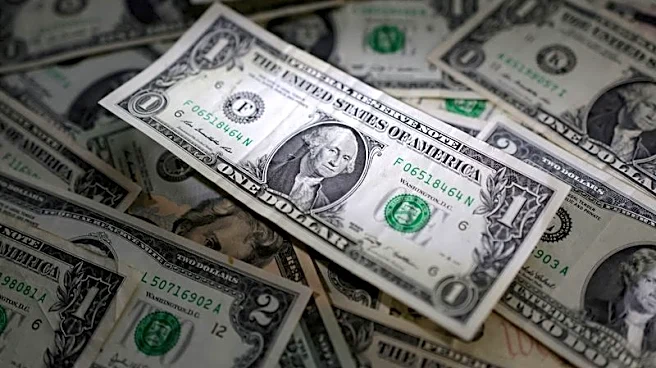
The exchange rate between the US dollar and the Euro is experiencing significant fluctuations, with 2500 US dollars currently converting to approximately 2315 euros. This dynamic valuation is influenced by several factors, including interest rate differentials
between the Federal Reserve and the European Central Bank, the relative economic performance of the US and Eurozone, inflation rates, and geopolitical stability. Historically, the EUR/USD pair has seen periods of euro strength and dollar rallies during global uncertainty. In recent years, the dollar strengthened considerably in 2022 and 2023 due to aggressive monetary policy tightening by the Federal Reserve. However, the euro has shown signs of recovery more recently, supported by expectations of slower rate hikes from the Fed and stable Eurozone economic data.
Why It's Important?
The volatility in the USD/EUR exchange rate has direct and significant implications for various US stakeholders. For American travelers to Europe, a stronger dollar means their budget stretches further, making travel more affordable, while a weaker dollar increases costs. US individuals making international purchases from European vendors benefit from a stronger dollar, as it reduces the effective price in dollars. Businesses engaged in transatlantic trade face currency risk; US exporters selling to Europe receive fewer euros for each dollar if the dollar strengthens, impacting profitability. Conversely, importers face the opposite effect. Investors holding European assets see their value fluctuate in dollar terms based on exchange rate movements, adding another layer of risk or opportunity to their portfolios. Understanding these dynamics is crucial for financial planning and risk management for anyone involved in cross-border transactions.
What's Next?
The future trajectory of the USD/EUR pair will continue to be shaped by a complex interplay of global factors. Key drivers to watch include the monetary policies of the Federal Reserve and the European Central Bank, particularly their interest rate decisions. The relative pace of economic recovery in the US and the Eurozone will also influence investor confidence and currency valuations. Geopolitical events, such as conflicts, trade disputes, and election cycles, are expected to inject significant volatility into currency markets. Additionally, fluctuations in commodity prices, especially oil and gas, can impact European economies and, consequently, the euro's value. Individuals and businesses involved in transatlantic financial activities will need to stay informed about these dynamics to navigate the currency landscape effectively and make informed financial decisions.
Beyond the Headlines
Beyond the immediate financial implications, the fluctuating USD/EUR exchange rate reflects deeper shifts in global economic power and stability. The dollar's strength during periods of global uncertainty often highlights its role as a safe-haven currency, indicating broader investor concerns about the global economic outlook. Conversely, a recovering euro could signal renewed confidence in the Eurozone's economic resilience. These currency movements can also influence international capital flows, affecting investment decisions and the competitiveness of industries in both regions. The ongoing technological advancements in currency exchange, with online platforms offering real-time rates and lower fees, are democratizing access to foreign exchange, but also place a greater onus on individuals and businesses to understand the underlying economic forces at play.