







What's Happening?
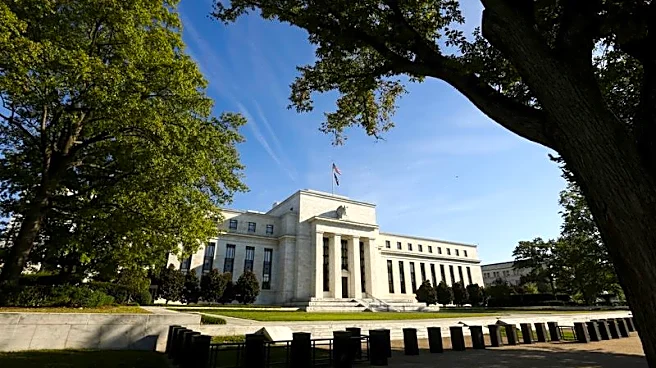
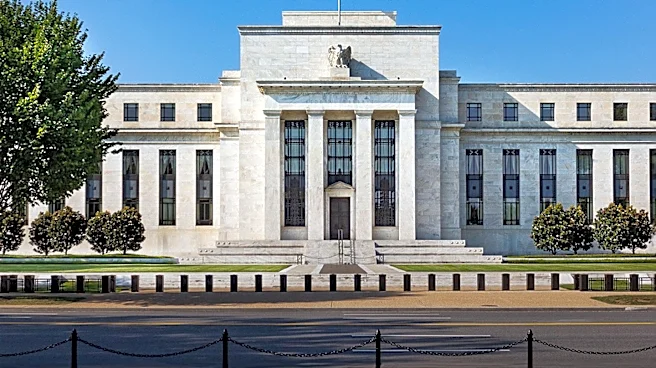
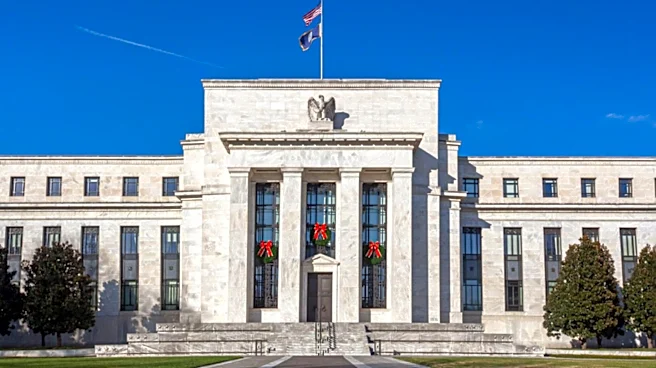
The Federal Reserve's annual bank stress test has confirmed that large U.S. banks are well-prepared to withstand a severe recession scenario. The test, which included a hypothetical situation with a 10% unemployment rate, a 39% drop in commercial real
estate prices, and a 30% decline in home prices, showed that all 32 banks examined remained above their minimum capital requirements. The industry's common equity tier 1 capital ratio fell by 1.6 percentage points but stayed comfortably above the required minimums. The results will not impact large bank capital requirements, which will remain unchanged until 2027. Following the stress test, JPMorgan Chase announced a $50 billion share repurchase program and raised its quarterly dividend, while Goldman Sachs also increased its dividend, citing strong earnings and capital positions.
Why It's Important?
The stress test results are significant as they demonstrate the robustness of the U.S. banking system in the face of potential economic downturns. This resilience is crucial for maintaining financial stability and ensuring that banks can continue to lend to households and businesses during challenging times. The decision to keep capital requirements unchanged until 2027 provides banks with regulatory certainty, allowing them to plan their capital strategies effectively. The positive outcomes of the stress test also instill confidence in the financial markets and stakeholders, reinforcing the strength of the U.S. banking sector.
What's Next?
The Federal Reserve plans to incorporate public feedback into future stress tests, aiming to enhance transparency and accountability. The banking industry will continue to focus on the pending Basel III Endgame proposal, which could reshape capital requirements in the future. Banks are expected to maintain their capital strategies while preparing for potential regulatory changes. The ongoing stability of the banking sector will be closely monitored by regulators, investors, and policymakers as they navigate the evolving economic landscape.